Creamy Spinach, Butter-Bloomed Spices, and Cheddar Cubes in Place of Paneer
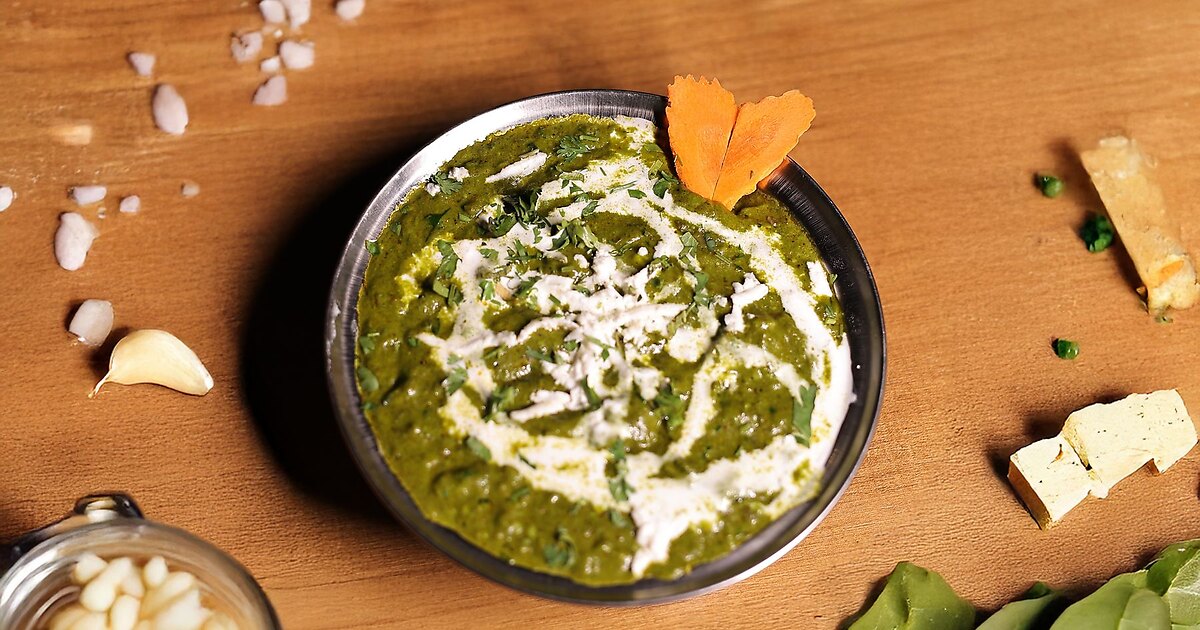
Saag paneer is one of the best things on an Indian restaurant menu, and the usual recipe leans on two things that don’t serve the Intestinal body type especially well: heavy cream and paneer. This version keeps everything that makes saag good (deeply cooked spinach, onion browned in butter, cumin seeds popping in fat) and swaps the cream for whole milk and plain yogurt and the paneer for cold cubes of white cheddar.
It started the practical way. We had spinach, whole milk, and a block of Aldi white cheddar, and no cream or paneer. Then we checked the cheese against the Intestinal food search and found that the substitution is a better fit than the original.
Why This Recipe Works
- Cooked spinach is an anchor food. It stays Frequently on both the Healthy and Sensitive lists for this type, so the main ingredient is one of the most supportive foods on the plate.
- Half purée, half chop. Blending half the spinach makes it creamy; chopping the rest keeps the texture that separates saag from creamed spinach.
- Butter carries the spices. Cumin seeds bloomed in butter, then ground spices toasted for 30 seconds, give you restaurant depth without a long ingredient list.
- Whole milk and yogurt replace cream. Milk loosens and enriches during the simmer; yogurt and a last pat of butter, stirred in off the heat, give the finish its tang and gloss.
- White cheddar replaces paneer. It’s the one cheese Mein rates Frequently for the Intestinal type, and added cold at the very end it holds as soft, mild cubes.

Saag Paneer with White Cheddar and Whole Milk
Cooked spinach, half puréed and half chopped, simmered in butter with cumin, coriander, turmeric, ginger, and garlic, loosened with whole milk, finished off the heat with plain yogurt and butter, and studded with cold cubes of low-fat white cheddar in place of paneer.
Ingredients
Equipment
- Large (12-inch) skillet or 4–5 quart pot
- Blender, food processor, or immersion blender
- Large pot and a bowl of ice water (only if using fresh spinach)
Method
- Cook the spinach. Fresh: bring a large pot of water to a boil, add the spinach in batches, and blanch . Move it to ice water, then drain and squeeze out as much water as you can. Frozen: thaw it and squeeze it hard in a clean towel. Either way, the spinach should be cooked and wrung dry.Tip: Squeezing matters more than it looks. Water left in the spinach dilutes the spices and the milk, and you end up simmering it off later.
- Make it half smooth, half chunky. Blend half the spinach with ¼ cup whole milk until mostly smooth. Finely chop the other half. Restaurant saag has body and texture; this gets you both.
- Chill the cheese. Cut the white cheddar into ¾-inch cubes and put them in the freezer while you cook. Cold cubes hold their shape in the hot saag.
- Bloom the cumin and cook the onion. Melt 2 tbsp butter in a large skillet over medium heat. Add the cumin seeds and cook about , until they darken a shade and smell toasty. Add the onion and cook , stirring now and then, until soft and golden.
- Add aromatics and spices. Add the garlic, ginger, and chile and cook . Stir in the coriander, ground cumin, turmeric, and cayenne and cook , until fragrant.Tip: If the pan looks dry and the spices start to scorch, add a splash of water. Burnt turmeric turns bitter.
- Simmer the saag. Add the puréed and chopped spinach, 1 tsp salt, and ½ cup whole milk. Stir well, turn the heat to low, and simmer gently , stirring often, until the flavors meld and it’s thick enough to mound on a spoon. Loosen with more milk a splash at a time if it gets too thick.Tip: Keep it at a lazy simmer, not a boil. Milk scorches on the bottom of a thick purée fast.
- Finish off the heat. Take the pan off the heat. Stir a spoonful of the hot saag into the yogurt to warm it, then stir the yogurt into the pan. Add the garam masala, kasuri methi, the last 1 tbsp butter, and a squeeze of lemon. Taste for salt.
- Add the cheddar last. Fold the cold cheddar cubes in gently, let the pan sit so the edges soften, and serve right away with basmati rice and naan.Tip: Cheddar is not paneer: it melts. Don’t sear it and don’t simmer it in the sauce. Off the heat and straight to the table is the whole trick.
Notes
- Why white cheddar? Paneer isn’t on Carolyn Mein’s food lists. Low-fat white cheddar is the only cheese the Intestinal type gets as a Frequently food; regular cheddar and every other cheese sit at Moderately. Any white cheddar works; reduced-fat cheddar is also the better cube, since it softens without puddling.
- Why cooked spinach? For this type, cooked spinach stays Frequently on both the Healthy and the Sensitive lists. Raw spinach drops to Rarely under stress. The blanching does real work here.
- No heavy cream. Whole milk plus a little plain yogurt and butter at the end gives the creaminess. Yogurt is Frequently on the Healthy list; sweet cream is only Moderately.
- Aloo saag variation: simmer 1 large diced Yukon Gold potato in salted water until just tender and fold it in with the spinach. Potatoes are Frequently on the Healthy list.
Where it lands on the Intestinal food lists
Cross-referenced against Carolyn Mein’s food lists for the Intestinal body type:
Built on the type’s anchor foods — 2 that stay top-tier even under stress (7 top-tier in all) — with no “Rarely” foods.
- Spinach (cooked) Frequently anchor
- White basmati rice Frequently anchor
- White low fat Cheddar Frequently
- Butter Frequently
- Plain yogurt Frequently
- Garlic Frequently
- Onions (chives, green, red, white, yellow, vidalia) Frequently
- Milk (whole) Moderately
- Lemons Moderately holds under stress
- Chili peppers Moderately
- Salt Moderately holds under stress
Scored against Carolyn Mein’s Intestinal Profile. Look up any food in the Healthy vs. Sensitive food search.
The spices (cumin, coriander, turmeric, ginger, garam masala, fenugreek) aren’t on Mein’s lists either way, so they’re left out of the score. They’re used in seasoning amounts.
Why White Cheddar Instead of Paneer
Paneer is a fresh cheese made by curdling hot milk with acid, and that’s why it doesn’t melt: you can sear it and simmer it and it keeps its shape. It isn’t on Mein’s lists by name. Its nearest relatives there, ricotta and cottage cheese, are Moderately foods for this type, along with almost every other cheese: cheddar, jack, mozzarella, feta, Swiss.
One cheese gets the top tier: low-fat white cheddar, Frequently on the Healthy list and Moderately on the Sensitive list. Regular white cheddar sits at Moderately, the same as most cheeses, so it’s still a fine choice. Reach for the reduced-fat block when the store has one.
The catch is that cheddar melts. Treat it accordingly:
- Cube it and chill it. ¾-inch cubes, 15 minutes in the freezer while the saag cooks.
- Never sear it, never simmer it. Paneer gets browned first; cheddar would just puddle in the pan.
- Add it off the heat, last. Fold the cold cubes in, wait two minutes, serve. The outside softens and the center stays intact.
- Don’t overdo it. Six to eight ounces for four servings. Past that, the dish starts tasting like cheesy creamed spinach instead of saag. White cheddar is milder than yellow, which helps.
Reduced-fat cheddar actually works in your favor here: it softens without breaking down into oil the way full-fat cheddar can.
Method
Step 1: Cook and Squeeze the Spinach
Fresh spinach: bring a large pot of water to a boil. Blanch the spinach in batches for 1 minute, move it to a bowl of ice water, then drain and squeeze it hard.
Frozen spinach: thaw it, then wring it out in a clean kitchen towel. Frozen spinach is already blanched, so it’s ready to go.
Get it as dry as you can. Every tablespoon of water you squeeze out now is one you don’t have to simmer off later.
Step 2: Half Smooth, Half Chunky
Blend half the spinach with ¼ cup whole milk until mostly smooth. Finely chop the other half.
Traditional saag isn’t baby-food smooth. Leaving half the spinach chopped gives it body and keeps it from tasting like creamed spinach.
Step 3: Cube and Chill the Cheese
Cut the white cheddar into ¾-inch cubes and put them in the freezer. You’ll add them at the very end.
Step 4: Bloom the Cumin and Brown the Onion
Melt 2 tablespoons butter in a large skillet over medium heat. Add the cumin seeds and cook about 30 seconds, until they darken a shade and smell toasty.
Add the onion and cook 8–10 minutes, until soft and golden. Don’t rush it; the browned onion is a big part of the flavor.
Step 5: Aromatics and Ground Spices
Add the garlic, ginger, and chile. Cook 1 minute.
Stir in the coriander, ground cumin, turmeric, and cayenne and cook 30 seconds, until fragrant. Spices bloomed in fat taste fuller than spices stirred into a sauce. If the pan looks dry, add a splash of water so the turmeric doesn’t scorch.
Step 6: Simmer the Saag
Add the puréed and chopped spinach, 1 teaspoon salt, and ½ cup whole milk. Stir well, then turn the heat to low and simmer gently for 10–15 minutes, stirring often.
You want it thick enough to mound on a spoon.
- Too thick? Add more milk, a splash at a time.
- Too thin? Simmer a few minutes longer.
Keep it at a lazy simmer. A thick spinach purée with milk in it scorches on the bottom quickly.
Step 7: Finish Off the Heat
Take the pan off the heat.
Stir a spoonful of the hot saag into the yogurt to warm it, then stir the yogurt into the pan. Warming it first keeps the yogurt from splitting.
Add the garam masala, the crushed kasuri methi if you have it, the last tablespoon of butter, and a squeeze of lemon. Taste and adjust the salt.
Step 8: Fold in the Cheddar and Serve
Fold the cold cheddar cubes in gently. Let the pan sit 2 minutes, until the edges of the cheese just start to soften, then serve right away.
Serve with basmati rice, one of only two grains (with amaranth) that stay Frequently on both lists for this type, and naan, roti, or toasted pita. It’s also a good side for butter chicken drumsticks, grilled chicken, lamb, or salmon.
Variations
Aloo saag (spinach and potato). Simmer a diced Yukon Gold potato in salted water until just tender and fold it in with the spinach in Step 6. Skip the cheese or keep it; both work.
Saag as a side, no cheese. Double the garlic, skip the cheddar, and finish with extra lemon. Good next to anything off the grill.
Homemade paneer. If you want the real thing, bring 8 cups of whole milk just to a boil, stir in ¼ cup lemon juice, and strain the curds through cheesecloth. Press under a heavy pan for an hour, then cube. It’s made from whole milk and lemon, both Moderately foods for this type.
On a stressed day. If you’re eating from the Sensitive list, skip the fresh chile and the cayenne (chili peppers drop to Rarely) and go lighter on the onion. The spinach, rice, butter, and yogurt all hold up.
Make-Ahead and Leftovers
Make the saag through Step 6 up to 3 days ahead and refrigerate it. To serve, warm it gently over low heat with a splash of milk, then do the off-heat finish (yogurt, butter, lemon) and add the cold cheese cubes. Leftovers with the cheese already in reheat fine, but the cubes will melt into the sauce. It still tastes good, just more like creamed spinach.
References
Barefoot Betters Intestinal Body Type Food Search, the full searchable tier list this recipe was checked against
Barefoot Betters Dutch-Oven Butter Chicken Drumsticks, the whole-milk-instead-of-cream approach this recipe follows
Eat Right for Your Body Type by Dr. Carolyn Mein