
Some mornings you don’t want an ancient grain and a soak-and-dry project — you want a warm bowl of oatmeal. This one is built for the Intestinal body type: the sensitive “funnel” of Carolyn Mein’s 25 Body Type System, the body whose whole job is taking food in and discerning what to keep. It’s the everyday, comforting cousin of our Ancient Grain Granola — same care about which foods this type handles best, but as a soft, buttery bowl you can make half-asleep.
The six add-ins you asked for — butter, peanut butter, frozen blueberries, dates, date sugar, and sorghum syrup — happen to be a well-chosen set for this type, and we scored every one of them against Mein’s food lists below.
Why these toppings work for the type
Here’s the honest version, because the tiers aren’t all the same:
- Date sugar and sorghum syrup are the anchors. Both are ‘Frequently’ foods on both the Healthy and the Sensitive list for the Intestinal type — the sweeteners this body keeps digesting well even on its worst days. That matters, because for this type maple syrup is a ‘Rarely’ food on both lists. Reaching for date sugar and sorghum instead is the single biggest thing that lands this bowl in the type’s top tier.
- Butter and dates are top-tier on a good day. Butter is ‘Frequently’ for this type (and one of Mein’s named recommended fats); Medjool dates are ‘Frequently’ too. Both ease back to ‘Moderately’ when you’re run-down — still fine, just no longer top-tier.
- Peanut butter and blueberries are the treat. Both are ‘Frequently’ on a healthy day, but they slide the furthest of anything here — all the way to ‘Rarely’ on the Sensitive list. So enjoy the peanut-butter swirl and warm berries when you’re feeling strong, and keep them light on a depleted morning.
A straight word about the oats
Steel-cut oats are the base, and we want to be honest about where they land: oats are a ‘Moderately’ food for the Intestinal type on both lists — not one of the resilient anchor grains. That’s not a knock; ‘Moderately’ means fine in rotation, which is exactly how to treat this bowl. What it’s not is a daily staple for a sensitive gut.
If you’re having an off week, this is the easy upgrade: build the very same bowl — butter, peanut butter, dates, sorghum, blueberries — on cooled basmati rice or cooked amaranth instead of oats. Those are the only two grains that hold ‘Frequently’ on both lists for this type, so the swap lifts the whole thing a tier. (That’s the logic behind our Ancient Grain Granola and Cardamom & Lemon Basmati Rice.)
Soak the oats so your gut gets the minerals
Oats, like most grains, carry phytic acid that can bind up iron and zinc. An overnight soak is the old-kitchen fix, and it does three things at once:
- Helps free the minerals. A little lemon juice or apple cider vinegar in the soak, plus the long soak itself, breaks down some of the phytic acid so more of the iron and zinc is available. Here’s the honest bit most oat recipes skip: oats are low in their own phytase enzyme, so — unlike some grains — soaking in plain water only does so much. The acid is what earns its keep.
- Makes it gentler and creamier. Pre-softened oats cook faster and break down more fully — easier on a gut that’s already sensitive.
- Costs you almost nothing. Stir a tablespoon of arrowroot and 1–2 teaspoons of lemon juice or ACV into the soak water, leave it overnight, and cook from the soak in the morning. For the most thorough phytate reduction, drain and rinse first — you trade a little creaminess for it.
If oats sit heavy — what actually helps
Steel-cut oats are already one of the easier oat forms to tolerate — intact groats, more resistant starch than instant, and beta-glucan that slows digestion. If a bowl still feels heavy, gassy, or spikes your blood sugar, the usual causes are portion size, undercooking, phytic acid, too little protein or fat, or the viscous fiber fermenting in your gut — not a missing “oat enzyme.” Here’s the honest order of what helps:
- Soak with acid, then cook it soft. Covered just above. The lemon-or-vinegar soak beats plain water because oats are phytase-poor; if you’re not gluten-free, a teaspoon of rye flour in the soak is the classic phytase donor (rye has gluten — a pinch of buckwheat flour is a weaker gluten-free stand-in). Then cook the groats fully soft — half-cooked steel-cut is hard work for the gut.
- Add protein and fat. Eggs, whole milk, yogurt, nuts, or a pat of butter slow digestion far more reliably than any spice. That’s the whole point of the Protein Custardy Oats variant below.
- Warming spices with some human data. Ceylon cinnamon (½–1 tsp) modestly blunts the glucose rise in some studies; ginger helps if the bowl sits like a brick. Both are in the recipe as options now.
- Fennel or peppermint tea after the meal for gas from the fermentable fiber — that’s a carminative, so it goes in the cup, not the soak pot.
- A ten-minute walk after eating flattens the glucose curve more than most add-ins do.
What’s overhyped for oats. A few popular add-ins don’t do what people hope:
- Bromelain (pineapple) is a protease — it cuts protein, not starch or beta-glucan — so it won’t make oats “lighter.” It only helps if the meal has protein; heat destroys it (add fresh pineapple or the capsule off-heat), and pineapple adds sugar that works against a glucose goal.
- Bitter melon has modest, mixed evidence for blood sugar at supplement doses (~1–2.4 g/day of extract), not a pinch in a bowl — and it can stack with diabetes meds toward hypoglycemia. Keep it a separate, dosed experiment, not an oatmeal mix-in.
- Cacao is lovely for flavor (1–2 tsp unsweetened), but it’s very high in oxalate — a poor daily habit if you form calcium-oxalate kidney stones — and it doesn’t blunt the oat glucose spike. Reach for cinnamon, vanilla, toasted pecans, or a few cacao nibs instead if oxalate is a concern.
This is general nutrition information, not medical advice. If you have celiac disease, IBS, diabetes, take glucose-lowering medication, or have a history of kidney stones, check with a clinician before adding concentrated herbs or supplements.
Where each ingredient lands on the Intestinal food lists
Here’s the whole bowl scored against Carolyn Mein’s food lists for the Intestinal type:
Built on the type’s anchor foods — 2 that stay top-tier even under stress (6 top-tier in all) — with no “Rarely” foods.
- Date sugar Frequently anchor
- Sorghum Frequently anchor
- Butter Frequently
- Dates Frequently
- Peanut butter Frequently
- Blueberries Frequently
- Oats Moderately holds under stress
Scored against Carolyn Mein’s Intestinal Profile. See the full Healthy vs. Sensitive crosswalk.
Date sugar and sorghum are the anchors that hold top-tier even under stress. Butter and dates stay top-tier on a healthy day and ease to ‘Moderately’ when you’re run-down. Peanut butter and blueberries start top-tier but slide to ‘Rarely’ on the Sensitive list — the ones to go light on when you’re depleted. And the oats themselves sit at ‘Moderately’ on both lists: fine in rotation, not a daily anchor.
Not on Mein’s 1997 lists (modern additions or seasoning-level amounts): arrowroot powder, Ceylon cinnamon, and sea salt (salt is a ‘Moderately’ condiment for this type, but a pinch is seasoning-level here).
Should you eat oats every day? A second opinion
We’re not going to pretend oats are a miracle food, and neither will this recipe. For a genuinely balanced take, it’s worth watching Dr. Sten Ekberg’s What If You Start Eating OATS Every Day For 30 Days? — a point-by-point pushback on the viral claim that daily oatmeal fixes your skin, builds muscle, melts fat, and reverses heart disease all at once:
Ekberg comes at this from a low-carb / metabolic-health angle, and his core point is one we agree with: context matters more than any single food. A few things worth carrying over to your own bowl:
- What is it replacing? Oatmeal easily beats toast-and-jam, pancakes, or sugary cereal. It’s not automatically better than a whole-food breakfast that carries more fat and protein. That’s why this recipe adds butter, a peanut-butter swirl, dates, and an option for raw whole milk — to round out a plain bowl of carbs into a fuller meal.
- It’s still a carbohydrate load. Oats are a reasonable, cheap option if you tolerate carbs well. If you’re insulin-resistant, prediabetic, or diabetic, a daily oat bowl is a poorer choice regardless of how it’s dressed up — worth being honest with yourself about.
- Protein is modest. About 7 g in a half-cup of dry oats — decent for a grain, low if you’re chasing an optimal protein target. The nuts, peanut butter, and milk here help; don’t lean on the oats alone for it.
- Fiber isn’t magic either. Oat beta-glucan can help some people with cholesterol and digestion, but it’s not uniquely superior, and for certain gut conditions more fiber makes things worse. Let your own gut have the final say.
- Least-processed wins. His practical advice — if you eat oats, choose a less-processed form like steel-cut and add fat and protein — is exactly the bowl we built.
None of this makes oatmeal “bad.” It makes it a sometimes food that earns its place when it replaces something worse and gets rounded out with fat and protein — which lines up with treating it as a feeling-strong breakfast in rotation, not a daily anchor. (Ekberg also offers a free “oat stats” ebook on his site as a companion to the video.)
The more skeptical view: Dr. Eric Berg on oatmeal
Dr. Eric Berg’s shorter Might Want to Think Twice Before Eating Oatmeal comes down harder than Ekberg does. Where Ekberg is mostly about context, Berg argues that oatmeal’s healthy reputation is overstated even for plain, unsweetened oats:
His three main cautions:
- The studies are weaker than the headlines. He points out that one oft-cited blood-sugar study used white bread as the control (an easy bar to clear), that the improvement was often only right after the meal, and that some cholesterol benefits came from isolated beta-glucan rather than a real bowl of oatmeal — while a study in people with diabetes found no blood-glucose change.
- Avenin. Oats are called gluten-free but contain avenin, a related protein Berg says can raise inflammatory cytokines. The reaction can be delayed, so people with IBS, inflammation, or gluten issues may not link symptoms back to their oats.
- Glyphosate. Conventional oats are often sprayed with glyphosate as a pre-harvest drying agent; Berg cites EWG testing that found residues in most oat products and the IARC/WHO “probable carcinogen” classification. His fix is to buy organic. His companion article adds phytic acid (which binds minerals like iron and zinc) and notes that the more processed the oat — instant, quick, thin flakes — the higher the blood-sugar spike.
His bottom line: skip breakfast (intermittent fasting) or reach for eggs, which don’t spike blood sugar the way oats can and bring more protein and fat.
A fair caveat on Berg. Independent dietitians have called his reading of the oatmeal literature selective — only some of the studies he references used white bread as the control, and broader reviews still find modest lipid benefits from oats in people with type 2 diabetes. The glyphosate-residue issue in oats is real and documented by groups like EWG, but regulatory agencies disagree on the cancer classification and on whether typical exposure levels matter. Take his stronger claims as one skeptical data point, not the last word.
How this bowl already answers him. A couple of his cautions are baked into the method here: we soak the oats (which is the traditional fix for phytic acid), we use steel-cut (his least-bad, least-processed form), and we add fat and protein rather than eating plain oats alone. If glyphosate concerns you, buy organic oats — an easy swap. What neither he nor we can wave away is that oats are still a carbohydrate: if you’re insulin-resistant or your own post-meal glucose runs high, both doctors would tell you to test yourself and treat this as an occasional bowl, not a daily one.
Two oats worth buying (Berg’s “steel-cut and organic” — the honest tradeoff). In practice it’s hard to get both at a grocery-store price, so here are two good picks depending on which box you weight:
- Budget steel-cut: Millville Traditional Steel Cut Oats from Aldi (30 oz, about $0.11/oz). True whole-grain steel-cut and genuinely cheap — but it’s conventional, not organic, so if glyphosate is your worry this isn’t the one. Soaking helps with the phytic acid, but it won’t touch residue.
- Organic, steel-cut-style: Coach’s Oats Organic (48 oz, sold at Costco). Certified organic — which answers Berg’s glyphosate point — and less-processed than rolled or instant, with a hearty steel-cut-like bite. Technically it’s their cracked-and-toasted process, not literally steel-cut, and it cooks faster (~5 minutes), so it’s a touch higher on the glycemic scale than true steel-cut but well below instant.
So it’s a pick-your-priority call: Aldi’s Millville nails the cut and the price; Coach’s nails the organic. If you want to satisfy Berg on both counts at once, you’re usually into a certified-organic steel-cut brand at a higher shelf price.
The grocery-aisle take: Bobby Parrish (FlavCity)
Where Berg and Ekberg argue about whether to eat oats, FlavCity’s Bobby Parrish takes you down the cereal aisle and argues about which ones to buy. He’s not anti-oats at all — he still calls plain oats a cheap nutritional powerhouse next to sugary cereal. His whole message is label quality:
His rules, and how this recipe already follows them:
- Buy organic — non-negotiable. Same glyphosate concern Berg raised; Parrish adds that a “glyphosate residue free” stamp is even better, and that non-GMO isn’t enough since non-GMO oats can still be sprayed. Only organic can’t be. (This is exactly why our buying note above points at the organic Coach’s over the conventional Aldi option.)
- Less-processed wins. Steel-cut over rolled; sprouted rolled oats as the next-best if you want that texture. Steel-cut is the base here.
- Skip the flavored packets. They smuggle in cane sugar (he flags ~9 g in some “berries” versions) and vague “natural flavors.” Plain oats plus your own toppings is cleaner — which is this whole recipe.
- Mind the extras. He’d rather see low-glycemic whole sweeteners (maple, coconut sugar) than cane sugar, and better fats than cheap refined canola or sunflower oil. Our bowl sweetens with sorghum and date sugar (whole-food sweeteners, no cane) and carries its fat in butter — both squarely on his good list.
On granola he leans grain-free/paleo (coconut sugar, seeds, nuts) over classic oat granola, though he’ll approve an organic oat granola if the oil and sugar are decent (~6 g sugar per ⅓ cup). If that’s your lane, our Ancient Grain Granola and the original Barefoot Better Breakfast Granola are built on the same low-sugar, better-fat principles.
A fair caveat on Parrish. Registered dietitians have pushed back on FlavCity’s “clean label” absolutism — an ingredient being hard to pronounce doesn’t make it harmful, and the glyphosate-residue levels in oats are debated. Take his aisle rules as a sensible bias toward organic and less-processed, not gospel. The through-line worth keeping is his, though: the problem was never oats, it’s cheap, sweetened, conventionally-sprayed oats.
The brand he flagged: Purely Elizabeth
Bobby’s “approved” example in that video was Purely Elizabeth, a Boulder brand. Their oatmeal line has grown a lot since 2020 and the SKUs aren’t all equal, so here’s the honest read on which one actually matches what he was praising:
- The Original Superfood Oatmeal pouch is the clean one. The brand lists just organic gluten-free oats plus organic flax, chia, quinoa flakes, and puffed amaranth — no added sugar, no seed oils, no “natural flavors.” Purely Elizabeth says its products are USDA Organic and Glyphosate Residue Free certified (the Detox Project standard), which is a stronger claim than a generic “organic oats.” That’s exactly Parrish’s lane, and it’s the SKU he was actually pointing at.
- The flavored cups and Protein Oatmeal are a different product. Still cleaner than mass-market packets, but they add sweetener (organic coconut sugar — Bobby’s preferred sugar, but still added sugar, around 8 g in some cups), and the newer Protein line (10–12 g plant protein) reintroduces “natural flavor.” They’re also rolled/instant oats, not steel-cut. Fine as a travel or convenience option; not the cleanest bowl.
Keep it in perspective. You’re paying a premium for the seeds, the certifications, and the convenience — not the oats themselves. A bag of organic steel-cut oats plus your own toppings is cheaper and less processed, and steel-cut is the form Parrish prefers over these rolled cups anyway — it’s the base this recipe already uses. And remember Berg and Ekberg would still file any of these under “carbohydrate breakfast”: organic and glyphosate-tested doesn’t change the blood-sugar math.
Two things worth knowing before you buy.
- Heavy metals — a granola caveat, not an oatmeal one. Independent testing by Lead Safe Mama (Tamara Rubin) reported detectable lead, arsenic, and cadmium in Purely Elizabeth granola — the Original Ancient Grain Granola (Sept 2024) and the Chocolate Sea Salt granola (Jan 2025) — and California has listed a Purely Elizabeth granola under a Prop 65 lead notice. Two things to hold together honestly: this is about the granola line, not the oatmeal SKUs above, and low-level heavy metals turn up across many grain, seed, and “ancient grain” products because plants pull them from soil — it’s a category-wide issue, not proof that a given bowl is unsafe. Note too that the brand’s “Glyphosate Residue Free” certification tests for the herbicide, not for heavy metals. If metals are your concern, favor a brand that publishes its own contaminant testing (One Degree Organic Foods is one) or plain bulk steel-cut you trust, and rotate your grains rather than eating the same one every day.
- New ownership (August 2026). Ferrero — the Nutella maker, and owner of WK Kellogg since 2025 — announced a deal to acquire Purely Elizabeth for a reported ~$850 million; founder Elizabeth Stein stays on as CEO and the brand keeps operating as a standalone unit. It doesn’t change today’s labels or certifications, but it’s the ownership context going forward if that matters to you.
Adding eggs for real staying power
Notice that both doctors above land in the same place: if you want protein and steady energy at breakfast, eggs beat a bowl of carbs. You don’t have to pick a side — the simplest way to answer the “oats are low in protein” critique is to bring eggs into this bowl. Two ways:
- Stir them in (custardy protein oats). Beat 1–2 eggs and whisk them into the oats over the last 2–3 minutes of cooking — pour slowly and stir constantly so they thicken into a custard instead of scrambling. It adds roughly 6–12 g of protein and makes the bowl richer and creamier without changing the sweet profile. This is the move if you want it all in one bowl.
- Serve them on the side. If custardy oats aren’t your thing, just have 1–2 eggs alongside — fried, soft-boiled, or scrambled in butter. That’s closer to Berg’s actual suggestion, and it keeps the sweet bowl and the savory protein separate.
Where eggs land for the Intestinal type: eggs are a “Moderately” food on Carolyn Mein’s Healthy list — the same tier as the oats themselves on a good day — so adding them doesn’t pull the bowl’s fit down when you’re feeling strong. They do slide to “Rarely” on the Sensitive list, so on a depleted morning eggs are the piece to ease back on; let the peanut butter and a splash of whole milk carry the protein instead. (This is why we left eggs off the scorecard above — it scores the core sweet bowl; eggs are an optional protein add-on.)
An honest word on the framework
The 25 Body Type System is Carolyn Mein’s model, not mainstream nutrition — we offer it as a lens some of you find genuinely useful, and we’ve matched this bowl to it carefully rather than hand-waving. What isn’t in question is the food science underneath: soaking oats really does make their minerals more available, and warming frozen berries really does give you sweetness with the fruit’s fiber intact. Eat this when you’re feeling strong, rotate it with your other breakfasts, and let your own body have the final say.
Simplify, create, and live with God in your heart.
Steel-Cut Oats for the Intestinal Body Type
Steel-Cut Oats for the Intestinal Body Type
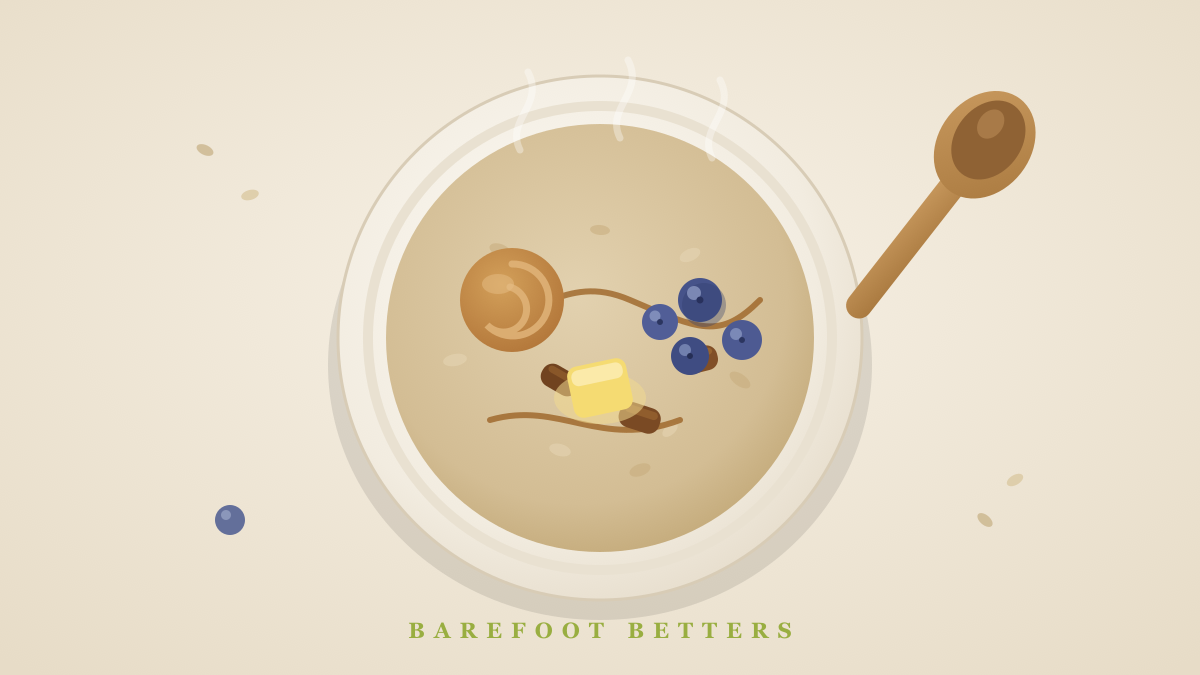
Soaked steel-cut oats simmered soft and creamy, stirred with butter and a swirl of peanut butter, sweetened with date sugar and sorghum syrup, and topped with chopped dates and warm frozen blueberries.
Ingredients
Equipment
- Dutch oven or heavy saucepan with a lid
- Wooden spoon
- Fine-mesh strainer (to drain the soaked oats)
- Small bowl for the overnight soak
Method
- Soak the oats. Stir the steel-cut oats into a bowl with the 3 cups of water, 1 tablespoon of arrowroot, and 1–2 teaspoons of lemon juice or apple cider vinegar, cover, and leave on the counter overnight (). The mild acid and the long soak soften the groats and break down some of the phytic acid, freeing up minerals — and because oats are low in their own phytase, that acid does more of the work than the soak alone. In the morning you’ll drain the oats to toast them (below), which also happens to be the more thorough way to shed the phytic acid (the notes have an optional rye-flour phytase booster).Tip: No time to soak? You can cook them straight from dry — just add 5–10 minutes to the simmer and an extra splash of water. Soaking is the digestion-friendly move for a ‘sensitive funnel’ gut, but it’s not mandatory.
- Drain and toast in butter. Drain the soaked oats well in a fine-mesh strainer (a quick shake or pat gets the surface water off). Melt the butter in a Dutch oven over medium heat, add the drained oats, and toast, stirring, until they smell nutty and darken a shade. This is Alton Brown’s move for deep flavor — he toasts dry oats about ; since ours are soaked, give the surface moisture a minute to steam off first, then let them actually toast.Tip: Wait for the toasty, nutty aroma — that’s the whole payoff of this step. Don’t rush it, and don’t let the butter brown past golden.
- Simmer. Add the 3 cups of water and a pinch of sea salt (fresh water, since you drained the soak). Bring to a boil, then drop to a low simmer, uncovered, stirring now and then, , until creamy and tender. Add a splash more water any time it gets too thick.Tip: For the softest, most digestible bowl, cook it a few minutes past ‘done’ so the grains fully break down — easier on a gut that’s working hard to discern what to keep.
- Finish. Off the heat, stir in the date sugar, cinnamon, and ginger (if using) until glossy. If you like it looser, stir in the ½ cup of raw whole milk now.
- Warm the berries. Drop the frozen blueberries onto the hot oats for a minute — they thaw into a warm, jammy ribbon without any added sugar.
- Top and swirl. Ladle into bowls. Add a spoonful of peanut butter and let it melt in, drizzle the sorghum syrup, and scatter the chopped dates over the top. Swirl once and eat warm.
Notes
- The sweeteners are the anchors here. Date sugar and sorghum syrup are both ‘Frequently’ foods on both Carolyn Mein’s Healthy and Sensitive food lists for the Intestinal type — the two ingredients that stay top-tier even when the gut is stressed. Reaching for them instead of maple syrup (a ‘Rarely’ food on both lists for this type) is what moves the bowl up a tier.
- The base grain is a ‘Moderately’ food, not a ‘Frequently’ one. Oats sit at ‘Moderately’ on both lists for the Intestinal type — perfectly fine in rotation, but not one of the type’s resilient anchor grains. On a depleted day, this is the swap to make: build the same bowl on cooled basmati rice or amaranth (the only two grains that hold ‘Frequently’ on both lists) and you’ve lifted the whole thing. See our Ancient Grain Granola for that version.
- Butter and dates ease back under stress; peanut butter and blueberries slide the furthest. Butter is ‘Frequently’ on a healthy day and eases to ‘Moderately’ when you’re run-down; dates do the same. Peanut butter and blueberries are ‘Frequently’ on a good day but drop all the way to ‘Rarely’ on the Sensitive list — so on a low-energy morning, keep the peanut-butter swirl small and lean on the dates and date sugar for sweetness instead.
- This is a feeling-strong breakfast. It follows the type’s breakfast rule of grain served with fruit and sweetener, and it’s genuinely comforting. In an active weight-loss phase, Mein pulls nuts, nut butters, and dried fruit back for this type — so treat the peanut butter and dates as an occasional pleasure then, not a daily fixture.
- Toast the oats for a deeper, nuttier bowl. This is the trick from Alton Brown’s buttermilk steel-cut oats: melt the butter and toast the oats before any liquid goes in. He toasts dry oats for about 2 minutes; since ours come out of an overnight soak, drain them well and give them 3–5 minutes so the surface moisture steams off before they brown. It’s the single biggest flavor upgrade here — and draining to toast is also the more thorough way to shed phytic acid, so the step pulls double duty.
- Serve smart. A little vitamin C (the blueberries help) lifts iron absorption from the oats; keep strong coffee or black tea away from the bowl, since their tannins block it.
- Add eggs for staying power. Both featured doctors prefer eggs to a bowl of carbs, so bring them in to fix the oats’ modest protein: whisk 1–2 beaten eggs into the cooking oats over the last 2–3 minutes, stirring constantly for custardy, higher-protein oats — or simply serve eggs on the side. Eggs are a ‘Moderately’ food for this type on a healthy day (the same tier as the oats), and slide to ‘Rarely’ under stress, so ease back on them on a depleted morning.
- If oats sit heavy, this is the order that helps. A sensible portion, cooking the groats fully soft, and adding protein and fat (the Protein Custardy Oats variant below) do more than any spice. Beyond that: the acid soak helps a little with phytic acid, and since oats are phytase-poor, 1 teaspoon of rye flour in the soak is the classic phytase booster — rye contains gluten, so skip it if you’re gluten-free; a pinch of buckwheat flour is a weaker gluten-free stand-in, and the acid soak plus a full cook already does most of the work. Optional ginger in the pot eases a heavy bowl, and a cup of fennel or peppermint tea afterward settles gas from the fermentable fiber (that’s a carminative for after the meal, not something to soak the oats in).
Protein Custardy Oats — the higher-protein variant
Want the version that actually answers Berg and Ekberg? Here’s the same bowl rebuilt for protein: cooked in milk, with two eggs tempered in for a silky custard, pushing a serving from about 7 g of protein toward 15–20 g. Print this one for a feeling-strong morning; drop back to the base bowl when you’re depleted.
Protein Custardy Oats (Higher-Protein Variant)
The same Intestinal-type bowl rebuilt to answer the protein critique — steel-cut oats cooked in milk with two eggs whisked in for a custardy finish, then the same butter, peanut butter, dates, and blueberries.
Ingredients
Equipment
- Medium saucepan with a lid
- Whisk
- Small bowl for the overnight soak
- Small bowl to temper the eggs
Method
- Soak the oats. Stir the steel-cut oats into the 2 cups of water with 1 tablespoon of arrowroot and 1–2 teaspoons of lemon juice or apple cider vinegar, cover, and leave on the counter overnight (). The mild acid helps break down phytic acid overnight. You’ll drain them to toast in the morning; the milk goes in then too, not tonight.
- Drain and toast in butter. Drain the soaked oats well. Melt the butter in a Dutch oven over medium heat, add the drained oats, and toast, stirring, until they smell nutty and darken a shade — Alton Brown’s trick for deeper flavor (soaked oats need a minute to steam off before they brown).Tip: Wait for the nutty aroma; don’t let the butter brown past golden.
- Simmer. Add 2 cups of fresh water and a pinch of sea salt. Bring to a boil, then simmer, uncovered, , until creamy and tender. Stir in the whole milk and warm it through.
- Temper the eggs — this is the whole trick. Beat the eggs in a small bowl. Slowly whisk in a ladle of the hot oats to warm the eggs without cooking them, then pour that mixture back into the pot over low heat, stirring constantly for until it thickens into a custard.Tip: Do not let it boil once the eggs are in — gentle heat gives you silky, custardy oats; a hard boil scrambles them.
- Finish. Off the heat, stir in the date sugar, cinnamon, and ginger (if using) until glossy. (The butter is already in, from toasting.)
- Top. Warm the frozen blueberries on the hot oats for a minute, then add a spoonful of peanut butter, a drizzle of sorghum, and the chopped dates. Swirl and eat warm.
Notes
- Why this variant exists. The plain bowl gives about 7 g of protein from the oats; the eggs, milk, and peanut butter here push a serving toward roughly 15–20 g — the higher-protein answer to Berg’s and Ekberg’s ’eggs beat a carb breakfast’ point, without giving up the bowl you actually want to eat.
- Body-type note. Eggs and whole milk are both ‘Moderately’ on Carolyn Mein’s Intestinal Healthy list (raw whole milk is ‘Frequently’), and both slide to ‘Rarely’ under stress — so treat this as a feeling-strong-day variant and drop back to the base bowl when you’re depleted.
- Custard, not scramble. The tempering step matters: warm the eggs with a little hot oatmeal first, then keep the heat low. Boiling after the eggs go in is the only way to ruin it.
More from the Barefoot Betters kitchen:
- Ancient Grain Granola (Amaranth, Basmati, Sorghum & Butter) — the anchor-grain version of this same idea
- The Intestinal Body Type: A Daily Joy Blend for the Sensitive Soul — meet the type this recipe is built for
- The Intestinal Body-Type Food Guide — the full Healthy vs. Sensitive crosswalk
- Cardamom & Lemon Basmati Rice in Chicken Broth — more with the type’s most resilient grain