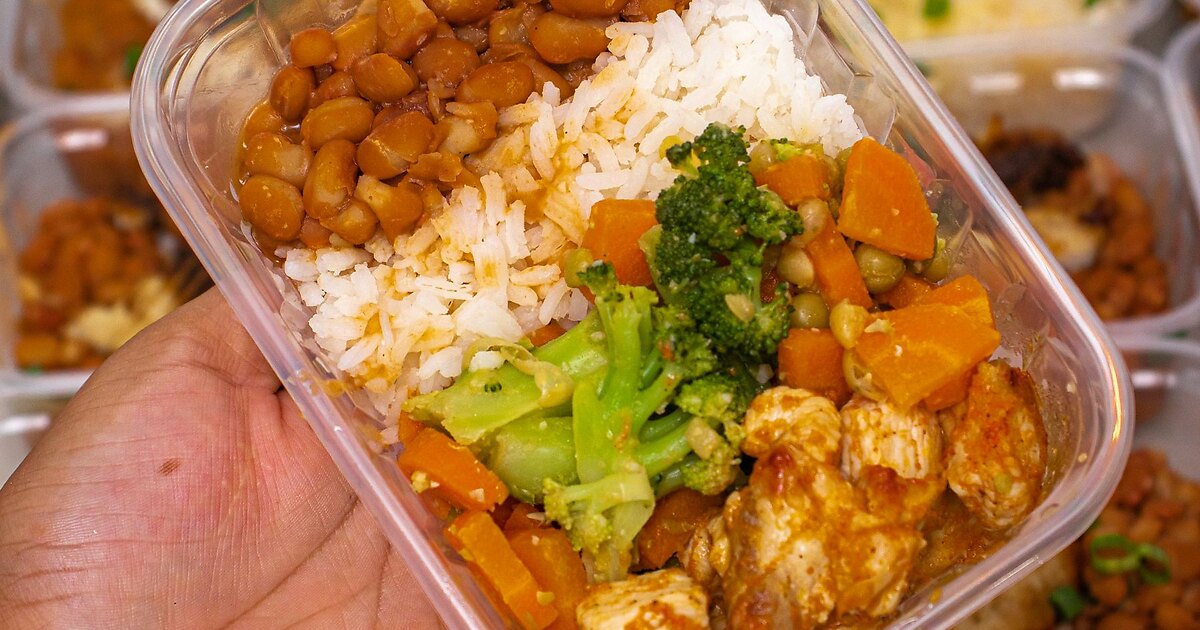
Batch cooking is where the Intestinal body type plan gets easy. The type is the sensitive “funnel” whose whole job is taking food in and sorting what to keep — so the win isn’t willpower, it’s having the right food already cooked and portioned when you’re hungry. Spend a couple of hours on prep day and the mid-week “what do I even eat” gap — the one that ends with off-list food — just disappears.
This is the plan we actually run: a handful of proteins, a grain or two, a couple of pots of beans, and one big tray of vegetables, all chosen against Carolyn Mein’s Intestinal food lists. If you want the full tier-by-tier reference behind every pick, it lives in the Intestinal Body Type Food Guide.
Start with the anchors
Before anything else, know your anchor foods — the ones that stay in the top “Frequently” tier on both the Healthy list (your everyday state) and the Sensitive list (when you’re stressed or not digesting well). When you build a week on these, even a rough gut week still has plenty to eat.
Built on the type’s anchor foods — 8 that stay top-tier even under stress (8 top-tier in all) — with no “Rarely” foods.
- White basmati rice Frequently anchor
- Amaranth Frequently anchor
- Pinto beans Frequently anchor
- Sweet potatoes Frequently anchor
- Peas Frequently anchor
- Snow pea pods Frequently anchor
- Spinach (cooked) Frequently anchor
- Walnuts (black, English) Frequently anchor
Scored against Carolyn Mein’s Intestinal Profile. See the full Healthy vs. Sensitive crosswalk.
Everything below rotates around that foundation.
The weekly batch-prep list
Prep-day formula: two proteins + a grain + two pots of beans + one big vegetable tray, plus your ferments going in the fridge. Scale the amounts to your week.
Proteins — poultry first
- Chicken drumsticks or thighs — “Frequently,” your best dense protein. Roast a big batch.
- Turkey — also “Frequently.” Rotate it in so poultry, not beef, is the workhorse.
- Cod and salmon — “Moderately.” One or two fish dinners a week; bake a tray.
- Grass-fed beef — keep it, but treat it as the once-a-week option: it’s “Moderately” on a good day and drops to “Rarely” when you’re sensitive.
- Bone broth — when you roast the chicken, simmer the bones into broth. Chicken and beef broth are “Moderately”-tier and a quiet win for a sensitive gut. Freeze it in jars.
Grains
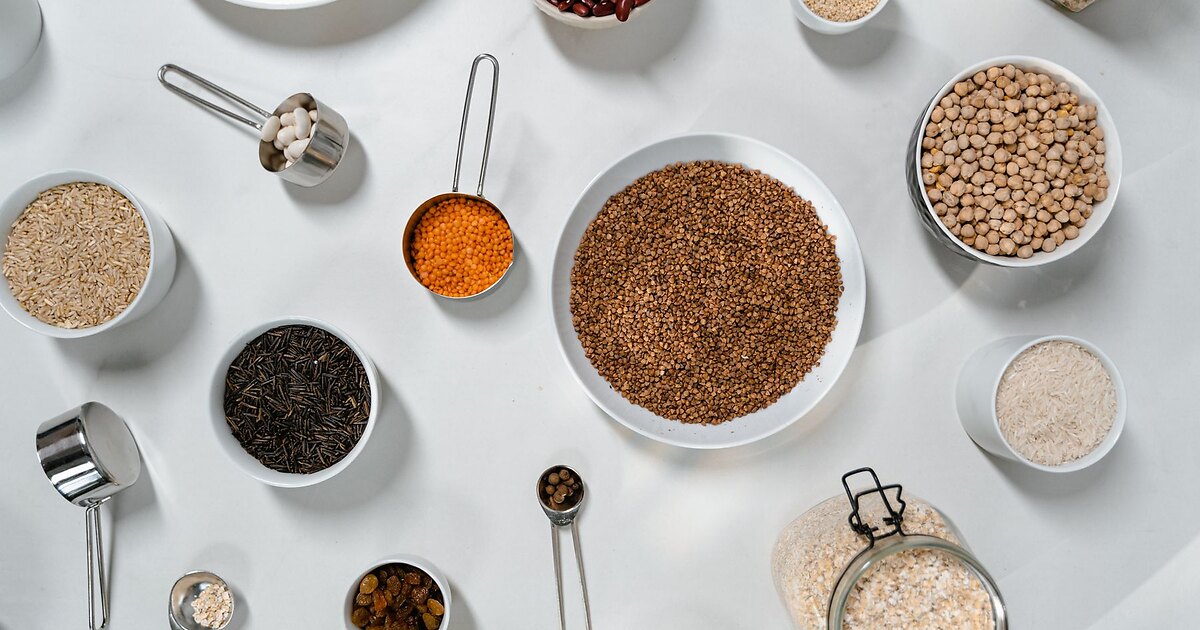
- White or brown basmati rice — a top-tier anchor. Cook a big pot; it reheats all week.
- Amaranth — the other anchor grain. Cook it like porridge for breakfast or as a savory side, and let it carry some of the load your oats do now.
- Steel-cut oats — keep them (“Moderately”), just know amaranth outranks them. Our buttery steel-cut oats show the Intestinal-friendly way to build the bowl.
Legumes
- Pinto beans — the single best legume for this type: “Frequently” on both lists. Cook a pot. (Here’s how we cook them for easy digestion.)
- Black beans — “Frequently” on the Healthy list. A second pot gives you variety.
Vegetables — the biggest easy upgrade
Most people’s prep is heavy on protein and grain and light on vegetables. Roast or steam one big tray so a vegetable is always within reach:
- Whole roasted sweet potatoes and yams — top-tier anchors. Roast them whole; the whole vegetable beats the sweet-potato chip by a mile (chips are a treat, not a staple).
- Cooked spinach, peas, and snow peas — all “Frequently” on both lists.
- Broccoli, cabbage, artichokes, mushrooms, brown onions, and garlic — all “Frequently” on the Healthy list. Garlic and brown onions double as your best seasoning (more on that below).
Ferments & snacks
- Sauerkraut or kimchi (“Moderately”) + kombucha — keep them; a spoonful with meals is a solid daily gut habit.
- Plain yogurt or kefir — “Frequently” on the Healthy list. Cultured dairy rounds out the fermented rotation and fits right alongside your kraut and kombucha.
- Walnuts — “Frequently” on both lists. Make them the grab-and-go snack instead of leaning on chips.
- Apples and apple cider — “Frequently.” An easy everyday fruit.
- Salsa, guacamole, sweet-potato chips — keep them as the treats they are. Our chips-and-salsa breakdown shows where each part lands.
How the full week scores
Here’s the whole plate scored against the Healthy list — with a marker on each food showing whether it holds or slides when you’re run-down. That last part is the teaching: the anchors hold, while beef, salsa, and avocado are the ones to ease back on when your gut is off.
Built on the type’s anchor foods — 6 that stay top-tier even under stress (12 top-tier in all) — with no “Rarely” foods.
- Chicken Frequently
- Turkey Frequently
- Pinto beans Frequently anchor
- Black beans Frequently
- White basmati rice Frequently anchor
- Amaranth Frequently anchor
- Sweet potatoes Frequently anchor
- Spinach (cooked) Frequently anchor
- Broccoli Frequently
- Cabbage (green, napa, red) Frequently
- Walnuts (black, English) Frequently anchor
- Plain yogurt Frequently
- Sauerkraut Moderately holds under stress
- Cod Moderately holds under stress
- Salmon Moderately holds under stress
- Oats Moderately holds under stress
- Beef Moderately
- Salsa Moderately
- Avocados Moderately
Scored against Carolyn Mein’s Intestinal Profile. See the full Healthy vs. Sensitive crosswalk.
The prep-day rhythm
- Start the slowest thing first. Beans and bone broth go on early; rice and amaranth are quick.
- Roast in parallel. One tray of poultry, one of fish, one of vegetables — the oven does the work while the pots simmer.
- Portion into grab containers. A protein + rice or beans + a vegetable in each. The grab-and-go container is what actually keeps you on-plan Tuesday at noon.
- Season with the type’s power flavors, not salt. Garlic, brown onions, and seaweed are all top-tier; salt and sea salt are only “Moderately.” Flavor with the alliums and go easy on the shaker.
Building the gut habits that stick
- Cook to the anchors when your gut acts up. On a flare, the Sensitive list drops beef, salsa, avocado, and a few others down to “Rarely.” Lean hard on chicken, pinto, basmati, amaranth, sweet potato, peas, cooked spinach, cabbage, broccoli, and walnuts — they stay top-tier no matter what. Let your body have the final say.
- Rotate the ferments daily. Kombucha one day, kraut the next, a bowl of plain yogurt the third — variety feeds a broader range of gut bacteria than binging one.
- Prep on a fixed day. The habit isn’t any single meal; it’s that Sunday (or whatever day) means beans, rice, poultry, and a vegetable tray. Make it routine and the week runs itself.
- Keep a fallback. Frozen cooked pinto beans and a jar of basmati mean even a no-prep week still has an anchor meal ten minutes away.
The 30-day reset week
When you want to lean out the midsection, a short, repetitive “reset” works — not because of any magic, but because a small, boring, high-volume food list quietly makes you eat less without tracking. The trick for this body type is to build that reset from the foods that stay top-tier even under stress, so a low-variety stretch doesn’t leave you running on foods your gut handles poorly. For the full method — strict vs. sensitive week, sample days, and portions — see the standalone Intestinal Body Type Reset Week.
Rules that keep the fat-loss going:
- Keep the list small — 6–10 foods, not four. Enough to not quit by day five.
- Repeat the same couple of meals most days.
- High volume, measured fat — a tablespoon of olive oil or a knob of butter, not a free pour.
- No liquid calories, no artificial sweeteners — both are “Rarely” foods for this type anyway.
- Skip yeasted bread for the stretch.
- Lift, and cap the strict version around 30 days, then widen the list back out. This body isn’t built for permanent four-food monotony.
Strict week — good digestion
- Protein: chicken or turkey (both “Frequently” on a good day).
- Carb: sweet potato first (an anchor); basmati rice or rice cakes (anchors); white/yellow potato only on strong-digestion days — it’s “Frequently” on the Healthy list but eases back when you’re off.
- Volume veg, cooked: broccoli, cabbage, cooked spinach, peas and snow peas; carrots in moderation.
- Legume: pinto beans 3–7× a week — the type’s standout, “Frequently” on both lists.
- Fat: 1 tbsp olive oil or a measured knob of butter.
- Snack: walnuts (an anchor).
Sensitive week — bloating, low energy, poor digestion
Pull back to what’s still standing when you’re depleted. Every plant food here holds its top tier on the Sensitive list, so none of it is asking a struggling gut to do extra work:
Built on the type’s anchor foods — 9 that stay top-tier even under stress (9 top-tier in all) — with no “Rarely” foods.
- Sweet potatoes Frequently anchor
- White basmati rice Frequently anchor
- Rice cakes Frequently anchor
- Amaranth Frequently anchor
- Pinto beans Frequently anchor
- Spinach (cooked) Frequently anchor
- Peas Frequently anchor
- Snow pea pods Frequently anchor
- Walnuts (black, English) Frequently anchor
Scored against Carolyn Mein’s Intestinal Profile. See the full Healthy vs. Sensitive crosswalk.
- Foundation: sweet potato + basmati rice or rice cakes + amaranth, plus pinto beans, cooked spinach, and peas/snow peas.
- Protein — keep it, but smaller. No dense protein stays top-tier under stress: chicken, turkey, and fish all ease to “Moderately” when you’re sensitive, so portion down rather than piling on, or lean on plain yogurt or kefir if dairy sits well. Drop beef and daily white potato for the week — those fall the furthest.
- Cook everything. Go easy on raw brassicas and salads until you’re back to strong; cooked spinach and squash are gentler than a big raw bowl.
If it helps, make lunch your biggest meal and keep dinner lighter — cooked vegetables midday, a lighter plate at night. Do what your digestion tells you.
This is a short reset, not a way of life. After about 30 days, widen back out to the full week above.
Print the week’s prep checklist
Want the whole week on the fridge or in your pocket at Costco? Tap Print (or Ctrl/⌘-P) and everything but this card drops away. ★ = anchor — holds top-tier even when your gut is off.
Proteins — poultry first
- ☐ Chicken drumsticks / thighs (Frequently)
- ☐ Turkey (Frequently)
- ☐ Cod &/or salmon (Moderately)
- ☐ Grass-fed beef — once (Moderately)
- ☐ Bone broth from the chicken bones
Grains
- ☐ Basmati rice ★
- ☐ Amaranth ★
- ☐ Steel-cut oats (Moderately)
Legumes
- ☐ Pinto beans ★
- ☐ Black beans (Frequently)
Vegetables — one big tray
- ☐ Sweet potatoes & yams, whole ★
- ☐ Cooked spinach, peas, snow peas ★
- ☐ Broccoli, cabbage, mushrooms
- ☐ Garlic & brown onions (season with these, not salt)
Ferments & snacks
- ☐ Sauerkraut / kimchi + kombucha
- ☐ Plain yogurt or kefir (Frequently)
- ☐ Walnuts ★
- ☐ Apples / apple cider (Frequently)
Prep-day order
- ☐ Beans & broth on first (slowest)
- ☐ Rice & amaranth (quick)
- ☐ Roast poultry, fish & veg trays
- ☐ Portion into grab containers
When your gut is off: cook to the ★ anchors and ease back on beef, salsa & avocado until you're back to strong.
barefootbetters.com — A Week of Intestinal Body Type Meals
Want to check any food not on this page? The full, searchable Healthy vs. Sensitive crosswalk has every food, tier by tier — the same dataset that scored the cards above.