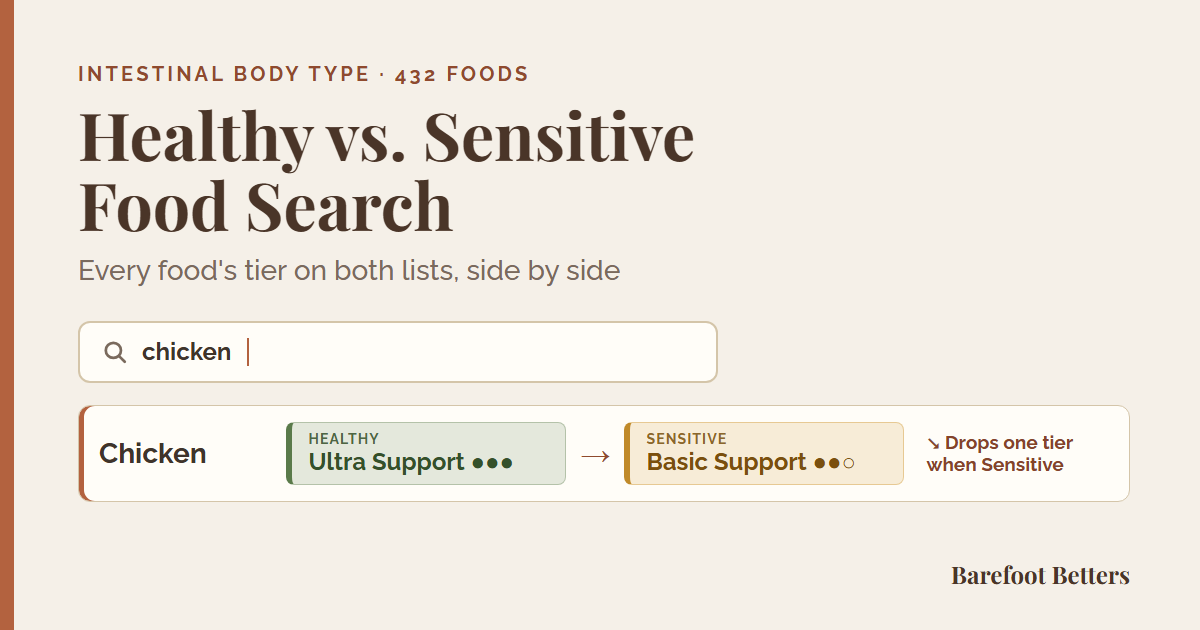
“Is chicken okay for me?” For the Intestinal body type the honest answer is it depends on the week. On a good day chicken is one of your best proteins. When you’re run-down and your gut is touchy, it drops a tier. Most food lists show you one answer, and that one difference gets lost.
This page puts the whole Intestinal crosswalk in one search box. Type a food and you see both answers at once: where it sits on the Healthy list and where it sits on the Sensitive list. If you want the guided tour of which foods to build meals around, start with our Intestinal body type food guide. This page is the lookup you come back to while you’re cooking.
How to read a result
Healthy vs. Sensitive. Carolyn Mein gives every body type two food lists. The Healthy list is your everyday state, when you’re strong and digesting well. The Sensitive list is for when you’re stressed, worn down, or not digesting well. The foods are the same; their placement changes.
The three tiers. Every food lands in one of three tiers, and the frequency is per food, not per category. “Basic Support grains” means each of those grains once or twice a week, not grains as a group.
| Tier | How often | In plain terms |
|---|---|---|
| Ultra Support | 3–7 meals a week, per food | The foods this body runs on |
| Basic Support | 1–2 meals a week | Fine in rotation, not daily |
| Stressful | No more than about once a month | Keep it occasional |
Each result shows both lists side by side, for example Chicken: Healthy, Ultra Support → Sensitive, Basic Support. The dots after each tier are a quick visual (●●● Ultra, ●●○ Basic, ●○○ Stressful), and the label always spells it out. A few foods carry a Source note. Open it to see where a tier was inferred or where the printed lists disagree.
Search the Intestinal food list
No foods match that search and those filters.
Dense Protein
- Chicken Healthy Ultra Support Sensitive Basic Support Drops one tier when Sensitive
- Turkey Healthy Ultra Support Sensitive Basic Support Drops one tier when Sensitive
- Beef Healthy Basic Support Sensitive Stressful Drops one tier when Sensitive
- Beef broth Healthy Basic Support Sensitive Basic Support Same tier in both
- Beef liver Healthy Basic Support Sensitive Basic Support Same tier in both
- Buffalo Healthy Basic Support Sensitive Basic Support Same tier in both
- Lamb Healthy Basic Support Sensitive Stressful Drops one tier when Sensitive
- Pork Healthy Basic Support Sensitive Stressful Drops one tier when Sensitive
- Ham Healthy Basic Support Sensitive Stressful Drops one tier when Sensitive
- Bacon Healthy Basic Support Sensitive Stressful Drops one tier when Sensitive
- Sausage Healthy Basic Support Sensitive Stressful Drops one tier when Sensitive
- Veal Healthy Basic Support Sensitive Basic Support Same tier in both
- Venison Healthy Basic Support Sensitive Basic Support Same tier in both
- Organ meats (heart, brain) Healthy Basic Support Sensitive Basic Support Same tier in both
- Chicken broth Healthy Basic Support Sensitive Basic Support Same tier in both
- Chicken livers Healthy Basic Support Sensitive Basic Support Same tier in both
- Cornish game hen Healthy Basic Support Sensitive Stressful Drops one tier when Sensitive
- Duck Healthy Basic Support Sensitive Basic Support Same tier in both
- Wild game
Healthy Basic Support
Sensitive Stressful
Drops one tier when Sensitive
Source note
H tier inferred — food is named only on Sensitive list (or as a group label)
- Eggs Healthy Basic Support Sensitive Stressful Drops one tier when Sensitive
- Tuna Healthy Stressful Sensitive Stressful Same tier in both
- Yellowtail tuna
Healthy Basic Support
Sensitive Stressful
Drops one tier when Sensitive
Source note
S tier inferred — on Healthy Basic fish list; Sensitive Basic fish ends at trout; Sensitive Stressful only says "tuna"
- Anchovy Healthy Basic Support Sensitive Basic Support Same tier in both
- Bass Healthy Basic Support Sensitive Basic Support Same tier in both
- Bonito
Healthy Basic Support
Sensitive Basic Support
Same tier in both
Source note
Printed as "Bonita" in profile; likely Bonito
- Catfish Healthy Basic Support Sensitive Basic Support Same tier in both
- Cod Healthy Basic Support Sensitive Basic Support Same tier in both
- Flounder Healthy Basic Support Sensitive Basic Support Same tier in both
- Haddock Healthy Basic Support Sensitive Basic Support Same tier in both
- Halibut Healthy Basic Support Sensitive Basic Support Same tier in both
- Herring Healthy Basic Support Sensitive Basic Support Same tier in both
- Mackerel Healthy Basic Support Sensitive Basic Support Same tier in both
- Mahi-mahi Healthy Basic Support Sensitive Basic Support Same tier in both
- Perch Healthy Basic Support Sensitive Basic Support Same tier in both
- Orange roughy Healthy Basic Support Sensitive Basic Support Same tier in both
- Salmon Healthy Basic Support Sensitive Basic Support Same tier in both
- Sardines Healthy Basic Support Sensitive Basic Support Same tier in both
- Shark Healthy Basic Support Sensitive Basic Support Same tier in both
- Red snapper Healthy Basic Support Sensitive Basic Support Same tier in both
- Sole Healthy Basic Support Sensitive Basic Support Same tier in both
- Swordfish Healthy Basic Support Sensitive Basic Support Same tier in both
- Trout Healthy Basic Support Sensitive Basic Support Same tier in both
- Abalone Healthy Basic Support Sensitive Basic Support Same tier in both
- Calamari (squid) Healthy Basic Support Sensitive Basic Support Same tier in both
- Clams Healthy Basic Support Sensitive Basic Support Same tier in both
- Crab Healthy Basic Support Sensitive Basic Support Same tier in both
- Eel Healthy Basic Support Sensitive Basic Support Same tier in both
- Lobster Healthy Basic Support Sensitive Stressful Drops one tier when Sensitive
- Mussels Healthy Basic Support Sensitive Basic Support Same tier in both
- Octopus Healthy Basic Support Sensitive Basic Support Same tier in both
- Oysters Healthy Basic Support Sensitive Basic Support Same tier in both
- Scallops Healthy Basic Support Sensitive Basic Support Same tier in both
- Shrimp Healthy Basic Support Sensitive Basic Support Same tier in both
Dairy
- Raw whole milk Healthy Ultra Support Sensitive Stressful Drops two tiers when Sensitive
- Plain yogurt Healthy Ultra Support Sensitive Basic Support Drops one tier when Sensitive
- Flavored yogurt Healthy Ultra Support Sensitive Basic Support Drops one tier when Sensitive
- Plain kefir Healthy Ultra Support Sensitive Basic Support Drops one tier when Sensitive
- Flavored kefir Healthy Basic Support Sensitive Basic Support Same tier in both
- Butter Healthy Ultra Support Sensitive Basic Support Drops one tier when Sensitive
- Milk (whole) Healthy Basic Support Sensitive Stressful Drops one tier when Sensitive
- Milk (2% / low fat) Healthy Basic Support Sensitive Stressful Drops one tier when Sensitive
- Milk (nonfat) Healthy Basic Support Sensitive Stressful Drops one tier when Sensitive
- Goat milk Healthy Basic Support Sensitive Stressful Drops one tier when Sensitive
- Half & half Healthy Basic Support Sensitive Basic Support Same tier in both
- Sour cream Healthy Basic Support Sensitive Basic Support Same tier in both
- Sweet cream Healthy Basic Support Sensitive Basic Support Same tier in both
- Buttermilk Healthy Basic Support Sensitive Basic Support Same tier in both
- Frozen yogurt Healthy Basic Support Sensitive Stressful Drops one tier when Sensitive
- Ice cream (Dreyer's, Ben & Jerry's, Swensen's) Healthy Basic Support Sensitive Stressful Drops one tier when Sensitive
- Ice Bean Healthy Basic Support Sensitive Stressful Drops one tier when Sensitive
- Rice Dream Healthy Basic Support Sensitive Stressful Drops one tier when Sensitive
Cheese
- White low fat Cheddar Healthy Ultra Support Sensitive Basic Support Drops one tier when Sensitive
- American Healthy Basic Support Sensitive Basic Support Same tier in both
- Blue Healthy Basic Support Sensitive Basic Support Same tier in both
- Brie Healthy Basic Support Sensitive Basic Support Same tier in both
- Camembert Healthy Basic Support Sensitive Basic Support Same tier in both
- Cheddar (regular) Healthy Basic Support Sensitive Basic Support Same tier in both
- Colby Healthy Basic Support Sensitive Basic Support Same tier in both
- Cottage Healthy Basic Support Sensitive Basic Support Same tier in both
- Cream cheese Healthy Basic Support Sensitive Basic Support Same tier in both
- Edam Healthy Basic Support Sensitive Basic Support Same tier in both
- Feta Healthy Basic Support Sensitive Basic Support Same tier in both
- Goat cheese Healthy Basic Support Sensitive Basic Support Same tier in both
- Gouda Healthy Basic Support Sensitive Basic Support Same tier in both
- Jack Healthy Basic Support Sensitive Basic Support Same tier in both
- Kefir cheese Healthy Basic Support Sensitive Basic Support Same tier in both
- Limburger Healthy Basic Support Sensitive Basic Support Same tier in both
- Mozzarella Healthy Basic Support Sensitive Basic Support Same tier in both
- Muenster Healthy Basic Support Sensitive Basic Support Same tier in both
- Parmesan Healthy Basic Support Sensitive Basic Support Same tier in both
- Ricotta Healthy Basic Support Sensitive Basic Support Same tier in both
- Romano Healthy Basic Support Sensitive Basic Support Same tier in both
- Swiss Healthy Basic Support Sensitive Basic Support Same tier in both
Nuts & Seeds
- Walnuts (black, English) Healthy Ultra Support Sensitive Ultra Support Same tier in both
- Cashews (dry roasted / unsalted) Healthy Ultra Support Sensitive Basic Support Drops one tier when Sensitive
- Cashew butter Healthy Ultra Support Sensitive Basic Support Drops one tier when Sensitive
- Raw cashews Healthy Basic Support Sensitive Basic Support Same tier in both
- Peanuts (unsalted, dry roasted) Healthy Ultra Support Sensitive Stressful Drops two tiers when Sensitive
- Peanut butter Healthy Ultra Support Sensitive Stressful Drops two tiers when Sensitive
- Raw peanuts Healthy Basic Support Sensitive Stressful Drops one tier when Sensitive
- Pecans Healthy Ultra Support Sensitive Stressful Drops two tiers when Sensitive
- Pumpkin seeds (roasted, unsalted) Healthy Ultra Support Sensitive Stressful Drops two tiers when Sensitive
- Sesame seeds (roasted, unsalted) Healthy Ultra Support Sensitive Stressful Drops two tiers when Sensitive
- Sunflower seeds (roasted, unsalted) Healthy Ultra Support Sensitive Stressful Drops two tiers when Sensitive
- Sesame seed butter Healthy Ultra Support Sensitive Stressful Drops two tiers when Sensitive
- Sunflower seed butter Healthy Ultra Support Sensitive Stressful Drops two tiers when Sensitive
- Pumpkin seeds (raw) Healthy Stressful Sensitive Stressful Same tier in both
- Raw sesame seeds Healthy Basic Support Sensitive Stressful Drops one tier when Sensitive
- Raw sunflower seeds Healthy Basic Support Sensitive Stressful Drops one tier when Sensitive
- Caraway seeds (raw or roasted) Healthy Basic Support Sensitive Stressful Drops one tier when Sensitive
- Almonds (raw, roasted) Healthy Basic Support Sensitive Stressful Drops one tier when Sensitive
- Almond butter Healthy Basic Support Sensitive Stressful Drops one tier when Sensitive
- Brazil nuts Healthy Basic Support Sensitive Stressful Drops one tier when Sensitive
- Water chestnuts Healthy Basic Support Sensitive Basic Support Same tier in both
- Coconuts Healthy Basic Support Sensitive Stressful Drops one tier when Sensitive
- Filberts
Healthy Basic Support
Sensitive Basic Support
Same tier in both
Source note
Filberts are hazelnuts; both names printed in profile
- Hazelnuts
Healthy Basic Support
Sensitive Basic Support
Same tier in both
Source note
Filberts are hazelnuts; both names printed in profile
- Macadamias (raw, roasted) Healthy Basic Support Sensitive Basic Support Same tier in both
- Macadamia butter Healthy Basic Support Sensitive Basic Support Same tier in both
- Pine nuts (raw, roasted) Healthy Basic Support Sensitive Basic Support Same tier in both
- Pistachios Healthy Basic Support Sensitive Stressful Drops one tier when Sensitive
Legumes
- Pinto beans Healthy Ultra Support Sensitive Ultra Support Same tier in both
- Black beans Healthy Ultra Support Sensitive Basic Support Drops one tier when Sensitive
- Lima (butter) beans Healthy Ultra Support Sensitive Basic Support Drops one tier when Sensitive
- Lentils Healthy Ultra Support Sensitive Basic Support Drops one tier when Sensitive
- Adzuki beans Healthy Basic Support Sensitive Basic Support Same tier in both
- Garbanzo beans Healthy Basic Support Sensitive Basic Support Same tier in both
- Great northern beans Healthy Basic Support Sensitive Basic Support Same tier in both
- Kidney beans Healthy Basic Support Sensitive Basic Support Same tier in both
- Navy beans Healthy Basic Support Sensitive Basic Support Same tier in both
- Red beans Healthy Basic Support Sensitive Basic Support Same tier in both
- Soy beans Healthy Basic Support Sensitive Stressful Drops one tier when Sensitive
- Black-eyed peas Healthy Basic Support Sensitive Basic Support Same tier in both
- Split peas Healthy Basic Support Sensitive Basic Support Same tier in both
- Hummus Healthy Basic Support Sensitive Basic Support Same tier in both
- Miso Healthy Basic Support Sensitive Basic Support Same tier in both
- Soy milk Healthy Basic Support Sensitive Stressful Drops one tier when Sensitive
- Tofu Healthy Basic Support Sensitive Stressful Drops one tier when Sensitive
Grains
- Amaranth Healthy Ultra Support Sensitive Ultra Support Same tier in both
- Brown basmati rice Healthy Ultra Support Sensitive Ultra Support Same tier in both
- White basmati rice Healthy Ultra Support Sensitive Ultra Support Same tier in both
- Rice cakes Healthy Ultra Support Sensitive Ultra Support Same tier in both
- Corn (grain) Healthy Ultra Support Sensitive Stressful Drops two tiers when Sensitive
- Corn bread Healthy Ultra Support Sensitive Stressful Drops two tiers when Sensitive
- Corn grits Healthy Ultra Support Sensitive Stressful Drops two tiers when Sensitive
- Hominy grits Healthy Ultra Support Sensitive Stressful Drops two tiers when Sensitive
- Millet Healthy Ultra Support Sensitive Basic Support Drops one tier when Sensitive
- Rye (grain) Healthy Ultra Support Sensitive Basic Support Drops one tier when Sensitive
- Long/short grain brown rice Healthy Ultra Support Sensitive Stressful Drops two tiers when Sensitive
- Polished rice Healthy Ultra Support Sensitive Basic Support Drops one tier when Sensitive
- Japanese rice Healthy Ultra Support Sensitive Basic Support Drops one tier when Sensitive
- Wild rice Healthy Ultra Support Sensitive Stressful Drops two tiers when Sensitive
- Rice bran Healthy Ultra Support Sensitive Stressful Drops two tiers when Sensitive
- Popcorn cakes Healthy Ultra Support Sensitive Basic Support Drops one tier when Sensitive
- Whole wheat (grain) Healthy Ultra Support Sensitive Basic Support Drops one tier when Sensitive
- Whole wheat tortillas
Healthy Ultra Support
Sensitive Stressful
Drops two tiers when Sensitive
Source note
S tier inferred — Healthy Ultra; Sensitive has whole wheat grain (Basic) and flour tortillas (Stressful), not whole wheat tortillas by name
- Whole wheat bread Healthy Ultra Support Sensitive Stressful Drops two tiers when Sensitive
- Cream of rice Healthy Ultra Support Sensitive Basic Support Drops one tier when Sensitive
- Cream of rye Healthy Ultra Support Sensitive Basic Support Drops one tier when Sensitive
- Cream of wheat Healthy Ultra Support Sensitive Basic Support Drops one tier when Sensitive
- Barley Healthy Basic Support Sensitive Stressful Drops one tier when Sensitive
- Buckwheat Healthy Basic Support Sensitive Stressful Drops one tier when Sensitive
- Blue corn Healthy Basic Support Sensitive Basic Support Same tier in both
- Corn tortillas Healthy Basic Support Sensitive Stressful Drops one tier when Sensitive
- Oats Healthy Basic Support Sensitive Basic Support Same tier in both
- Oat flour pancakes Healthy Basic Support Sensitive Basic Support Same tier in both
- Popcorn Healthy Basic Support Sensitive Basic Support Same tier in both
- Quinoa Healthy Basic Support Sensitive Basic Support Same tier in both
- Triticale Healthy Basic Support Sensitive Basic Support Same tier in both
- Wheat bran Healthy Basic Support Sensitive Basic Support Same tier in both
- Wheat germ Healthy Basic Support Sensitive Basic Support Same tier in both
- Refined wheat flour Healthy Basic Support Sensitive Basic Support Same tier in both
- Flour tortillas Healthy Basic Support Sensitive Stressful Drops one tier when Sensitive
- French bread Healthy Basic Support Sensitive Stressful Drops one tier when Sensitive
- Italian bread Healthy Basic Support Sensitive Stressful Drops one tier when Sensitive
- Garlic bread
Healthy Basic Support
Sensitive Stressful
Drops one tier when Sensitive
Source note
S tier inferred — food is on Healthy list but not named on Sensitive list; profile claims Sensitive contains the same foods (Healthy Basic breads; not in Sensitive bread lists)
- 7-grain / multi-grain bread Healthy Basic Support Sensitive Stressful Drops one tier when Sensitive
- Oat bread Healthy Basic Support Sensitive Stressful Drops one tier when Sensitive
- Corn/rye bread Healthy Basic Support Sensitive Stressful Drops one tier when Sensitive
- Rye bread Healthy Basic Support Sensitive Stressful Drops one tier when Sensitive
- Yeast-free rye bread Healthy Basic Support Sensitive Basic Support Same tier in both
- Rice bread
Healthy Basic Support
Sensitive Stressful
Drops one tier when Sensitive
Source note
S tier inferred — food is on Healthy list but not named on Sensitive list; profile claims Sensitive contains the same foods (Healthy Basic breads; not in Sensitive bread lists)
- Sprouted grain bread Healthy Basic Support Sensitive Stressful Drops one tier when Sensitive
- Sourdough bread Healthy Basic Support Sensitive Stressful Drops one tier when Sensitive
- White bread Healthy Basic Support Sensitive Stressful Drops one tier when Sensitive
- Croissants Healthy Basic Support Sensitive Stressful Drops one tier when Sensitive
- Bagels (plain) Healthy Basic Support Sensitive Basic Support Same tier in both
- Onion bagels Healthy Basic Support Sensitive Basic Support Same tier in both
- Bagels (other) Healthy Basic Support Sensitive Stressful Drops one tier when Sensitive
- English muffins Healthy Basic Support Sensitive Basic Support Same tier in both
- Oat crackers Healthy Basic Support Sensitive Basic Support Same tier in both
- Oriental rice crackers Healthy Basic Support Sensitive Basic Support Same tier in both
- Rye crackers Healthy Basic Support Sensitive Basic Support Same tier in both
- Saltines Healthy Basic Support Sensitive Basic Support Same tier in both
- Sesame seed crackers Healthy Basic Support Sensitive Basic Support Same tier in both
- Carr's Table Water crackers Healthy Basic Support Sensitive Basic Support Same tier in both
- Whole wheat crackers Healthy Basic Support Sensitive Basic Support Same tier in both
- Pasta (plain) Healthy Basic Support Sensitive Basic Support Same tier in both
- Spinach pasta Healthy Basic Support Sensitive Stressful Drops one tier when Sensitive
- Beet pasta Healthy Basic Support Sensitive Stressful Drops one tier when Sensitive
- Tomato pasta Healthy Stressful Sensitive Stressful Same tier in both
- Couscous Healthy Basic Support Sensitive Basic Support Same tier in both
- Udon noodles Healthy Basic Support Sensitive Basic Support Same tier in both
- Chinese rice noodles Healthy Basic Support Sensitive Basic Support Same tier in both
- Oat bran
Healthy Not listed
Sensitive Stressful
On the Sensitive list only
Source note
Appears only on Sensitive list (not on Healthy list) — only under Sensitive Stressful grains; no Healthy tier assigned
Vegetables
- Artichokes Healthy Ultra Support Sensitive Basic Support Drops one tier when Sensitive
- Beets Healthy Ultra Support Sensitive Stressful Drops two tiers when Sensitive
- Broccoli Healthy Ultra Support Sensitive Basic Support Drops one tier when Sensitive
- Brussels sprouts Healthy Ultra Support Sensitive Stressful Drops two tiers when Sensitive
- Cabbage (green, napa, red) Healthy Ultra Support Sensitive Basic Support Drops one tier when Sensitive
- Corn (vegetable) Healthy Ultra Support Sensitive Stressful Drops two tiers when Sensitive
- Cucumbers Healthy Ultra Support Sensitive Stressful Drops two tiers when Sensitive
- Garlic Healthy Ultra Support Sensitive Basic Support Drops one tier when Sensitive
- Jicama Healthy Ultra Support Sensitive Basic Support Drops one tier when Sensitive
- Red leaf lettuce Healthy Ultra Support Sensitive Basic Support Drops one tier when Sensitive
- Mushrooms Healthy Ultra Support Sensitive Basic Support Drops one tier when Sensitive
- Onions (chives, green, red, white, yellow, vidalia) Healthy Ultra Support Sensitive Stressful Drops two tiers when Sensitive
- Brown onions Healthy Ultra Support Sensitive Basic Support Drops one tier when Sensitive
- Peas Healthy Ultra Support Sensitive Ultra Support Same tier in both
- Snow pea pods Healthy Ultra Support Sensitive Ultra Support Same tier in both
- Potatoes (all varieties) Healthy Ultra Support Sensitive Basic Support Drops one tier when Sensitive
- Sweet potatoes Healthy Ultra Support Sensitive Ultra Support Same tier in both
- Pumpkin Healthy Ultra Support Sensitive Basic Support Drops one tier when Sensitive
- Seaweed (arame, dulse, kelp, nori, wakame) Healthy Ultra Support Sensitive Basic Support Drops one tier when Sensitive
- Spinach (cooked)
Healthy Ultra Support
Sensitive Ultra Support
Same tier in both
Source note
Healthy lists spinach without form; Sensitive Ultra is cooked spinach
- Spinach (raw)
Healthy Ultra Support
Sensitive Stressful
Drops two tiers when Sensitive
Source note
Healthy lists spinach without form; Sensitive Stressful is raw spinach
- Squash (acorn, butternut) Healthy Ultra Support Sensitive Basic Support Drops one tier when Sensitive
- Yams Healthy Ultra Support Sensitive Basic Support Drops one tier when Sensitive
- Asparagus Healthy Basic Support Sensitive Basic Support Same tier in both
- Avocados Healthy Basic Support Sensitive Stressful Drops one tier when Sensitive
- Bamboo shoots Healthy Basic Support Sensitive Basic Support Same tier in both
- Green beans Healthy Basic Support Sensitive Basic Support Same tier in both
- Yellow wax beans Healthy Basic Support Sensitive Basic Support Same tier in both
- Lima beans (as vegetable) Healthy Basic Support Sensitive Basic Support Same tier in both
- Bok choy Healthy Basic Support Sensitive Basic Support Same tier in both
- Broccoflower Healthy Basic Support Sensitive Basic Support Same tier in both
- Carrots Healthy Basic Support Sensitive Basic Support Same tier in both
- Cauliflower Healthy Basic Support Sensitive Basic Support Same tier in both
- Celery Healthy Basic Support Sensitive Basic Support Same tier in both
- Chard Healthy Basic Support Sensitive Basic Support Same tier in both
- Cilantro Healthy Basic Support Sensitive Basic Support Same tier in both
- Eggplant Healthy Basic Support Sensitive Basic Support Same tier in both
- Greens (beet, collard, mustard, turnip) Healthy Basic Support Sensitive Basic Support Same tier in both
- Kale Healthy Basic Support Sensitive Basic Support Same tier in both
- Kohlrabi Healthy Basic Support Sensitive Basic Support Same tier in both
- Leeks Healthy Basic Support Sensitive Basic Support Same tier in both
- Lettuce (Boston, butter, endive, curly leaf, romaine) Healthy Basic Support Sensitive Basic Support Same tier in both
- Okra Healthy Basic Support Sensitive Basic Support Same tier in both
- Olives (black)
Healthy Basic Support
Sensitive Stressful
Drops one tier when Sensitive
Source note
S tier inferred — food is on Healthy list but not named on Sensitive list; profile claims Sensitive contains the same foods (Healthy Basic olives include black; Sensitive lists only green, ripe)
- Olives (green, ripe) Healthy Basic Support Sensitive Basic Support Same tier in both
- Parsley Healthy Basic Support Sensitive Basic Support Same tier in both
- Parsnips Healthy Basic Support Sensitive Basic Support Same tier in both
- Bell peppers (green, red, yellow) Healthy Basic Support Sensitive Stressful Drops one tier when Sensitive
- Chili peppers Healthy Basic Support Sensitive Stressful Drops one tier when Sensitive
- Pimentos Healthy Basic Support Sensitive Stressful Drops one tier when Sensitive
- Radish / daikon radish Healthy Basic Support Sensitive Basic Support Same tier in both
- Rutabaga Healthy Basic Support Sensitive Basic Support Same tier in both
- Sauerkraut Healthy Basic Support Sensitive Basic Support Same tier in both
- Shallots Healthy Basic Support Sensitive Basic Support Same tier in both
- Sprouts (alfalfa, mung bean, clover, radish, sunflower) Healthy Basic Support Sensitive Basic Support Same tier in both
- Squash (banana, spaghetti, yellow/summer, zucchini) Healthy Basic Support Sensitive Basic Support Same tier in both
- Tomatoes (cooked / canned) Healthy Basic Support Sensitive Basic Support Same tier in both
- Tomatoes (raw / hothouse / vine-ripened) Healthy Basic Support Sensitive Stressful Drops one tier when Sensitive
- Turnips Healthy Basic Support Sensitive Basic Support Same tier in both
- Watercress Healthy Basic Support Sensitive Basic Support Same tier in both
- Arugula Healthy Stressful Sensitive Stressful Same tier in both
- Iceberg (head) lettuce Healthy Stressful Sensitive Stressful Same tier in both
Vegetable Juices
- Celery juice Healthy Basic Support Sensitive Basic Support Same tier in both
- Carrot juice Healthy Basic Support Sensitive Basic Support Same tier in both
- Carrot/celery juice Healthy Basic Support Sensitive Basic Support Same tier in both
- Parsley juice Healthy Basic Support Sensitive Basic Support Same tier in both
- Spinach juice Healthy Basic Support Sensitive Basic Support Same tier in both
- Tomato juice Healthy Basic Support Sensitive Basic Support Same tier in both
- V-8 Healthy Basic Support Sensitive Basic Support Same tier in both
Fruits
- Apples (Golden or Red Delicious) Healthy Ultra Support Sensitive Basic Support Drops one tier when Sensitive
- Apples (Jonathan, Rome Beauty, McIntosh, Pippin, Granny Smith) Healthy Basic Support Sensitive Basic Support Same tier in both
- Bananas
Healthy Ultra Support
Sensitive Basic Support
Drops one tier when Sensitive
Source note
Source conflict: also listed under Sensitive Stressful content next to Vegetable Juice label (fruit names, likely layout error); CSV uses Sensitive Basic
- Blueberries Healthy Ultra Support Sensitive Stressful Drops two tiers when Sensitive
- Strawberries Healthy Ultra Support Sensitive Basic Support Drops one tier when Sensitive
- Grapes (black, red) Healthy Ultra Support Sensitive Basic Support Drops one tier when Sensitive
- Green grapes Healthy Basic Support Sensitive Basic Support Same tier in both
- Cantaloupe (alone) Healthy Ultra Support Sensitive Basic Support Drops one tier when Sensitive
- Black plums Healthy Ultra Support Sensitive Basic Support Drops one tier when Sensitive
- Dates Healthy Ultra Support Sensitive Basic Support Drops one tier when Sensitive
- Dried pineapples Healthy Ultra Support Sensitive Ultra Support Same tier in both
- Raisins Healthy Ultra Support Sensitive Basic Support Drops one tier when Sensitive
- Blackberries Healthy Basic Support Sensitive Basic Support Same tier in both
- Boysenberries Healthy Basic Support Sensitive Basic Support Same tier in both
- Cranberries Healthy Basic Support Sensitive Basic Support Same tier in both
- Gooseberries Healthy Basic Support Sensitive Basic Support Same tier in both
- Raspberries Healthy Basic Support Sensitive Basic Support Same tier in both
- Cherries
Healthy Basic Support
Sensitive Basic Support
Same tier in both
Source note
Source conflict: also listed under Sensitive Stressful content next to Vegetable Juice label (fruit names, likely layout error); CSV uses Sensitive Basic
- Grapefruits (red, white) Healthy Basic Support Sensitive Basic Support Same tier in both
- Guavas Healthy Basic Support Sensitive Basic Support Same tier in both
- Kiwi Healthy Basic Support Sensitive Basic Support Same tier in both
- Kumquats Healthy Basic Support Sensitive Basic Support Same tier in both
- Lemons Healthy Basic Support Sensitive Basic Support Same tier in both
- Limes Healthy Basic Support Sensitive Basic Support Same tier in both
- Loquats Healthy Basic Support Sensitive Basic Support Same tier in both
- Mangos Healthy Basic Support Sensitive Basic Support Same tier in both
- Melon (casaba)
Healthy Basic Support
Sensitive Basic Support
Same tier in both
Source note
Source conflict: also listed under Sensitive Stressful content next to Vegetable Juice label (fruit names, likely layout error); CSV uses Sensitive Basic
- Melon (crenshaw)
Healthy Basic Support
Sensitive Basic Support
Same tier in both
Source note
Source conflict: also listed under Sensitive Stressful content next to Vegetable Juice label (fruit names, likely layout error); CSV uses Sensitive Basic
- Melon (honeydew)
Healthy Basic Support
Sensitive Stressful
Drops one tier when Sensitive
Source note
Honeydew listed twice on Sensitive Stressful in profile
- Watermelon Healthy Basic Support Sensitive Stressful Drops one tier when Sensitive
- Nectarines Healthy Basic Support Sensitive Basic Support Same tier in both
- Oranges Healthy Basic Support Sensitive Stressful Drops one tier when Sensitive
- Papayas Healthy Basic Support Sensitive Basic Support Same tier in both
- Peaches Healthy Basic Support Sensitive Basic Support Same tier in both
- Pears Healthy Basic Support Sensitive Basic Support Same tier in both
- Persimmons Healthy Basic Support Sensitive Basic Support Same tier in both
- Pineapples (fresh) Healthy Basic Support Sensitive Basic Support Same tier in both
- Plums (purple, red) Healthy Basic Support Sensitive Basic Support Same tier in both
- Pomegranates Healthy Basic Support Sensitive Basic Support Same tier in both
- Rhubarb Healthy Basic Support Sensitive Basic Support Same tier in both
- Tangelos Healthy Basic Support Sensitive Basic Support Same tier in both
- Tangerines Healthy Basic Support Sensitive Basic Support Same tier in both
- Figs (fresh, dried) Healthy Basic Support Sensitive Basic Support Same tier in both
- Prunes Healthy Basic Support Sensitive Basic Support Same tier in both
- Apricots Healthy Stressful Sensitive Stressful Same tier in both
Fruit Juices
- Apple juice
Healthy Ultra Support
Sensitive Basic Support
Drops one tier when Sensitive
Source note
Also printed under Healthy Ultra Fruits as "apple, apple cider" (juice items)
- Apple cider
Healthy Ultra Support
Sensitive Basic Support
Drops one tier when Sensitive
Source note
Also printed under Healthy Ultra Fruits as "apple, apple cider" (juice items)
- Cranapple Healthy Ultra Support Sensitive Ultra Support Same tier in both
- Cranberry juice Healthy Ultra Support Sensitive Basic Support Drops one tier when Sensitive
- Cranberry concentrate w/ Re-Vita Healthy Ultra Support Sensitive Ultra Support Same tier in both
- Apple/apricot juice Healthy Basic Support Sensitive Stressful Drops one tier when Sensitive
- Apricot juice Healthy Basic Support Sensitive Stressful Drops one tier when Sensitive
- Black cherry juice Healthy Basic Support Sensitive Basic Support Same tier in both
- Red cherry juice Healthy Basic Support Sensitive Basic Support Same tier in both
- Grape juice (purple, red, white) Healthy Basic Support Sensitive Basic Support Same tier in both
- Grapefruit juice Healthy Basic Support Sensitive Basic Support Same tier in both
- Guava juice Healthy Basic Support Sensitive Basic Support Same tier in both
- Lemon juice Healthy Basic Support Sensitive Basic Support Same tier in both
- Papaya juice Healthy Basic Support Sensitive Basic Support Same tier in both
- Pear juice Healthy Basic Support Sensitive Basic Support Same tier in both
- Pineapple juice Healthy Basic Support Sensitive Basic Support Same tier in both
- Pineapple/coconut juice Healthy Basic Support Sensitive Basic Support Same tier in both
- Prune juice Healthy Basic Support Sensitive Basic Support Same tier in both
- Tangerine juice Healthy Basic Support Sensitive Basic Support Same tier in both
- Watermelon juice Healthy Basic Support Sensitive Basic Support Same tier in both
- Orange juice Healthy Stressful Sensitive Stressful Same tier in both
Vegetable Oils
- All-blend oil Healthy Basic Support Sensitive Basic Support Same tier in both
- Almond oil Healthy Basic Support Sensitive Stressful Drops one tier when Sensitive
- Avocado oil Healthy Basic Support Sensitive Basic Support Same tier in both
- Canola oil Healthy Basic Support Sensitive Basic Support Same tier in both
- Coconut oil Healthy Basic Support Sensitive Basic Support Same tier in both
- Corn oil Healthy Basic Support Sensitive Basic Support Same tier in both
- Flaxseed oil Healthy Basic Support Sensitive Basic Support Same tier in both
- Olive oil Healthy Basic Support Sensitive Basic Support Same tier in both
- Peanut oil Healthy Basic Support Sensitive Basic Support Same tier in both
- Safflower oil Healthy Basic Support Sensitive Basic Support Same tier in both
- Sesame oil Healthy Basic Support Sensitive Basic Support Same tier in both
- Soy oil Healthy Basic Support Sensitive Stressful Drops one tier when Sensitive
- Sunflower oil Healthy Basic Support Sensitive Basic Support Same tier in both
Sweeteners
- Brown rice syrup Healthy Ultra Support Sensitive Ultra Support Same tier in both
- Sorghum Healthy Ultra Support Sensitive Ultra Support Same tier in both
- Molasses Healthy Ultra Support Sensitive Stressful Drops two tiers when Sensitive
- Date sugar Healthy Ultra Support Sensitive Ultra Support Same tier in both
- Re-Vita Healthy Ultra Support Sensitive Basic Support Drops one tier when Sensitive
- Stevia Healthy Ultra Support Sensitive Basic Support Drops one tier when Sensitive
- Honey Healthy Basic Support Sensitive Stressful Drops one tier when Sensitive
- Brown sugar Healthy Basic Support Sensitive Stressful Drops one tier when Sensitive
- Raw sugar Healthy Basic Support Sensitive Stressful Drops one tier when Sensitive
- Refined cane sugar Healthy Basic Support Sensitive Stressful Drops one tier when Sensitive
- Barley malt syrup Healthy Basic Support Sensitive Basic Support Same tier in both
- Corn syrup Healthy Basic Support Sensitive Stressful Drops one tier when Sensitive
- Sucanat
Healthy Basic Support
Sensitive Stressful
Drops one tier when Sensitive
Source note
Printed as "Succonant" in profile; likely Sucanat
- Maple syrup Healthy Stressful Sensitive Stressful Same tier in both
- Fructose Healthy Stressful Sensitive Stressful Same tier in both
- Saccharin Healthy Stressful Sensitive Stressful Same tier in both
- Aspartame / NutraSweet / Equal / Sweet'n Low Healthy Stressful Sensitive Stressful Same tier in both
Condiments
- Spike Healthy Ultra Support Sensitive Ultra Support Same tier in both
- Pickles (dill, sweet) Healthy Ultra Support Sensitive Ultra Support Same tier in both
- Salt Healthy Basic Support Sensitive Basic Support Same tier in both
- Sea salt Healthy Basic Support Sensitive Basic Support Same tier in both
- Vege-Sal Healthy Basic Support Sensitive Basic Support Same tier in both
- Catsup Healthy Basic Support Sensitive Stressful Drops one tier when Sensitive
- Mustard Healthy Basic Support Sensitive Stressful Drops one tier when Sensitive
- Horseradish Healthy Basic Support Sensitive Stressful Drops one tier when Sensitive
- Barbecue sauce Healthy Basic Support Sensitive Stressful Drops one tier when Sensitive
- Pesto sauce Healthy Basic Support Sensitive Stressful Drops one tier when Sensitive
- Soy sauce Healthy Basic Support Sensitive Stressful Drops one tier when Sensitive
- Tahini Healthy Basic Support Sensitive Basic Support Same tier in both
- Salsa Healthy Basic Support Sensitive Stressful Drops one tier when Sensitive
- Vinegar Healthy Basic Support Sensitive Basic Support Same tier in both
- Margarine Healthy Stressful Sensitive Stressful Same tier in both
- Mayonnaise Healthy Stressful Sensitive Stressful Same tier in both
Salad Dressings
- Blue cheese dressing
Healthy Basic Support
Sensitive Basic Support
Same tier in both
Source note
Source conflict: cream dressings appear on both Sensitive Basic and Sensitive Stressful; CSV uses Basic
- French dressing
Healthy Basic Support
Sensitive Basic Support
Same tier in both
Source note
Source conflict: cream dressings appear on both Sensitive Basic and Sensitive Stressful; CSV uses Basic
- Ranch dressing
Healthy Basic Support
Sensitive Basic Support
Same tier in both
Source note
Source conflict: cream dressings appear on both Sensitive Basic and Sensitive Stressful; CSV uses Basic
- Creamy Italian dressing
Healthy Basic Support
Sensitive Basic Support
Same tier in both
Source note
Source conflict: cream dressings appear on both Sensitive Basic and Sensitive Stressful; CSV uses Basic
- Creamy avocado dressing
Healthy Basic Support
Sensitive Basic Support
Same tier in both
Source note
Source conflict: cream dressings appear on both Sensitive Basic and Sensitive Stressful; CSV uses Basic
- Thousand island dressing
Healthy Basic Support
Sensitive Basic Support
Same tier in both
Source note
Source conflict: cream dressings appear on both Sensitive Basic and Sensitive Stressful; CSV uses Basic
- Vinegar and oil
Healthy Basic Support
Sensitive Basic Support
Same tier in both
Source note
On Sensitive Basic only (not on Sensitive Stressful cream-dressing list)
- Lemon juice and oil
Healthy Basic Support
Sensitive Basic Support
Same tier in both
Source note
On Sensitive Basic only (not on Sensitive Stressful cream-dressing list)
Desserts
- Chocolate / chocolate desserts Healthy Basic Support Sensitive Stressful Drops one tier when Sensitive
- Custards Healthy Basic Support Sensitive Stressful Drops one tier when Sensitive
- Tapioca Healthy Basic Support Sensitive Stressful Drops one tier when Sensitive
- Puddings Healthy Basic Support Sensitive Stressful Drops one tier when Sensitive
- Pies Healthy Basic Support Sensitive Stressful Drops one tier when Sensitive
- Cakes Healthy Basic Support Sensitive Stressful Drops one tier when Sensitive
- Raspberry sherbet Healthy Stressful Sensitive Stressful Same tier in both
- Orange sherbet Healthy Stressful Sensitive Stressful Same tier in both
Chips
- Bean chips Healthy Basic Support Sensitive Stressful Drops one tier when Sensitive
- Corn chips (blue, white, yellow) Healthy Basic Support Sensitive Stressful Drops one tier when Sensitive
- Potato chips Healthy Basic Support Sensitive Stressful Drops one tier when Sensitive
Beverages
- Seltzer water Healthy Ultra Support Sensitive Stressful Drops two tiers when Sensitive
- Coffee Healthy Basic Support Sensitive Stressful Drops one tier when Sensitive
- Coffee with Re-Vita Healthy Basic Support Sensitive Stressful Drops one tier when Sensitive
- Tea blends (Bigelow) Healthy Basic Support Sensitive Basic Support Same tier in both
- Constant Comment tea Healthy Basic Support Sensitive Stressful Drops one tier when Sensitive
- Peppermint tea Healthy Basic Support Sensitive Basic Support Same tier in both
- Raspberry tea Healthy Basic Support Sensitive Basic Support Same tier in both
- Herbal tea Healthy Basic Support Sensitive Basic Support Same tier in both
- Black tea Healthy Basic Support Sensitive Stressful Drops one tier when Sensitive
- Green tea Healthy Basic Support Sensitive Basic Support Same tier in both
- Japanese tea Healthy Basic Support Sensitive Basic Support Same tier in both
- Chinese oolong tea Healthy Basic Support Sensitive Basic Support Same tier in both
- Mineral water Healthy Basic Support Sensitive Stressful Drops one tier when Sensitive
- Sparkling water Healthy Basic Support Sensitive Stressful Drops one tier when Sensitive
- Wine (red, white) Healthy Basic Support Sensitive Stressful Drops one tier when Sensitive
- Sake Healthy Basic Support Sensitive Stressful Drops one tier when Sensitive
- Liqueurs Healthy Basic Support Sensitive Stressful Drops one tier when Sensitive
- Champagne Healthy Basic Support Sensitive Stressful Drops one tier when Sensitive
- Beer Healthy Basic Support Sensitive Stressful Drops one tier when Sensitive
- Barley malt liquor Healthy Basic Support Sensitive Stressful Drops one tier when Sensitive
- Gin Healthy Basic Support Sensitive Stressful Drops one tier when Sensitive
- Scotch Healthy Basic Support Sensitive Stressful Drops one tier when Sensitive
- Vodka Healthy Basic Support Sensitive Stressful Drops one tier when Sensitive
- Whiskey Healthy Basic Support Sensitive Stressful Drops one tier when Sensitive
- Root beer Healthy Basic Support Sensitive Stressful Drops one tier when Sensitive
- Regular sodas Healthy Basic Support Sensitive Stressful Drops one tier when Sensitive
- Diet sodas Healthy Stressful Sensitive Stressful Same tier in both
Download the full list (CSV) All 432 foods with their Healthy and Sensitive tiers and source notes.
Why the crosswalk matters
If you only ever look at the Healthy list, the Intestinal type looks generous: 92 foods in the top tier. The Sensitive list tells a different story. Only 18 foods stay Ultra Support on both lists:
- Grains: amaranth, brown and white basmati rice, rice cakes
- Legume: pinto beans
- Nuts: walnuts (black or English)
- Vegetables: peas, snow pea pods, sweet potatoes, cooked spinach
- Fruit and juice: dried pineapple, Cranapple, cranberry concentrate with Re-Vita
- Sweeteners: brown rice syrup, sorghum, date sugar
- Condiments: dill or sweet pickles, Spike
Those are the anchors, and our recipes lean on them for a reason.
Then there are the foods that fall hardest. 27 foods go straight from Ultra Support to Stressful when you’re Sensitive. That includes pecans, peanuts and peanut butter, roasted pumpkin, sesame, and sunflower seeds, corn and corn bread, regular brown and wild rice, whole wheat bread, beets, cucumbers, raw spinach, most onions, blueberries, molasses, and seltzer water. Those are everyday foods for a lot of people, and you’d never guess from the Healthy list alone that they’re the first to go.
In all, 254 foods keep the same tier on both lists, 177 drop (47 from Ultra to Basic, 27 from Ultra to Stressful, 103 from Basic to Stressful), and one, oat bran, appears only on the Sensitive list. No food rates higher on the Sensitive list than on the Healthy one.
So when a meal doesn’t sit well, look up its Sensitive tier and eat at that level until you feel strong again. Set Show tiers for to Sensitive and the whole list re-reads that way. Then come back up once your appetite, comfort after meals, energy, and bowel habits are back to normal for you.
Look up the form you’re actually eating
Mein often rates the same ingredient differently depending on how it’s prepared:
| Food | Healthy | Sensitive |
|---|---|---|
| Spinach, cooked | Ultra Support | Ultra Support |
| Spinach, raw | Ultra Support | Stressful |
| Tomatoes, cooked or canned | Basic Support | Basic Support |
| Tomatoes, raw | Basic Support | Stressful |
| Cashews, dry roasted | Ultra Support | Basic Support |
| Cashews, raw | Basic Support | Basic Support |
| Pumpkin seeds, roasted | Ultra Support | Stressful |
| Pumpkin seeds, raw | Stressful | Stressful |
Two patterns stand out. Cooking keeps spinach and tomatoes from sliding. On the Healthy list the raw and cooked forms tie; on the Sensitive list only the cooked form holds its tier. Roasting moves seeds and nuts up. Dry-roasted cashews and peanuts, and roasted pumpkin, sesame, and sunflower seeds, all sit at Ultra Support on the Healthy list, a tier or more above their raw forms.
It doesn’t always favor the cooked or processed form, though. Raw whole milk is Ultra Support on the Healthy list while regular whole milk is Basic, and dried pineapple (Ultra Support on both lists) outranks fresh (Basic on both). So search for the form you’re actually eating, not just the ingredient: typing spinach brings up all four spinach entries side by side.
Where this data comes from
These classifications are Carolyn Mein’s, from Different Bodies, Different Diets and specifically the Intestinal Profile & Diet’s Healthy Food List and Sensitive Food List. We haven’t re-rated anything. We organized her two lists into one crosswalk so each food shows both tiers. Where the printed lists are ambiguous (a name that only appears on one list, an apparent typo like “Bonita” for bonito, or a food printed under two tiers), the entry keeps the placement we use and a Source note that says so. For the complete, authoritative lists and the reasoning behind them, get Mein’s book or the Intestinal Diet & Profile at BodyType.com.
The same dataset powers the body-type fit cards on our recipes and the ingredient checker in the food guide, so the search, the guide, and the recipes always agree.
This is educational reference material about one dietary system, not medical advice or a diagnosis. Your own body, and your own practitioner, get the final say.
Keep going
- The Intestinal Body Type Food Guide: the anchor foods, tier by tier, and how to build meals around them
- Intestinal Body Type Weekly Meal Prep: a week of food built from the anchors
- Intestinal Body Type Reset Week: for the weeks you’re living on the Sensitive list
- Meet the Intestinal Body Type: the type itself, plus a Daily Joy Blend
Simplify, create, and live with God in your heart.