Darker skin or a rash along the sides of the neck matches what Dr. Eric Berg talks about most often as acanthosis nigricans. He does not usually call that an autoimmune disease. The autoimmune condition he does link to whole-body darkening is Addison’s disease. A third look-alike he mentions is pellagra (niacin/B3 deficiency), which can form a “necklace” of darkened skin around the neck.
1. What Berg describes on the sides of the neck: acanthosis nigricans
In videos such as How to Reverse Acanthosis Nigricans and 7 Skin Warning Signs of Diabetes, Berg describes:
- Gray-brown darkening
- Back of the neck and sides of the neck, plus armpits and other folds
- A velvety feel
- Symmetric (both sides)
Watch Dr. Berg:
How to Reverse Acanthosis Nigricans
7 Skin Warning Signs of Diabetes
His explanation: excess insulin (hyperinsulinemia) from insulin resistance, which he says is mainly driven by eating too many carbohydrates. He ties it to type 2 diabetes, prediabetes, PCOS, Cushing’s, and metabolic syndrome — not to autoimmunity.
What he recommends: cut carbs, “healthy keto,” and intermittent fasting to lower insulin. He argues the skin change can fade if insulin comes down.
He also notes that skin tags around the neck often travel with the same high-insulin pattern.
Medical context: dermatology sources agree acanthosis nigricans is usually a marker of insulin resistance, obesity, or diabetes. A rare “autoimmune acanthosis nigricans” has been reported with Hashimoto’s thyroiditis, lupus, Sjögren’s, and scleroderma — but that is not how Berg frames the common neck-darkening picture.
2. The autoimmune condition Berg links to darker skin: Addison’s disease
Addison’s disease (primary adrenal insufficiency) is often autoimmune. The immune system damages the adrenal glands, cortisol falls, ACTH rises, and that extra ACTH (and related MSH activity) can darken the skin.
Berg mentions Addison’s when he talks about darkened spots and adrenal problems. He contrasts:
- Cushing’s — high cortisol
- Addison’s — low cortisol, autoimmune destruction, darkened spots on the body, plus fatigue, weakness, weight loss, salt cravings
Addisonian darkening is usually more general than a velvety neck patch: sun-exposed skin, skin folds (including the neck), knuckles, palmar creases, scars, gums, and the inside of the cheeks. Neck folds can look darker, but it is not typically a single velvety stripe only on the front-sides of the neck.
This is a medical condition that needs lab work and a physician — not a diet experiment.
3. Look-alike Berg mentions: pellagra (“Casal’s necklace”)
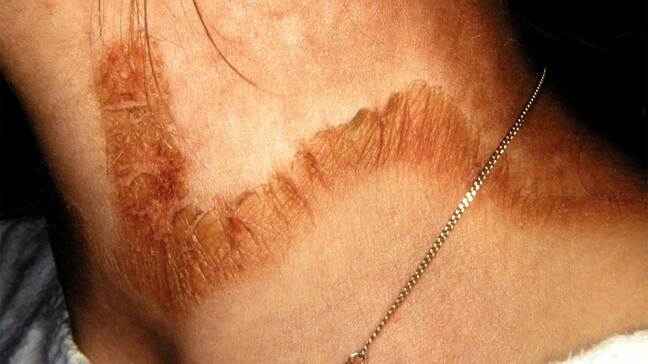
In an older video on darkened skin folds, Berg says pellagra (vitamin B3 / niacin deficiency) can mimic darkened folds around the neck. Classically that is Casal’s necklace: a collar-like, sun-sensitive rash that becomes brown and scaly around the neck.
That is a nutritional deficiency, not an autoimmune disease. It is uncommon in people eating a varied diet; historically it was linked to corn-heavy diets and alcoholism.
4. Other Berg themes people mix with this
Berg often folds skin problems into a few favorite themes, which can make videos sound like “autoimmune neck rash” even when he is talking about something else:
| Theme | How it relates | Autoimmune? |
|---|---|---|
| Acanthosis nigricans | Dark velvety sides/back of neck | Usually no (insulin) |
| Addison’s | Generalized darkening, including folds | Often yes |
| Vitiligo | Loss of pigment (white patches) | Often yes |
| Keto rash / prurigo pigmentosa | Itchy rash on neck/torso that can leave net-like dark marks | No |
| Vitamin D | He calls low vitamin D a driver of many autoimmune and skin diseases | He treats it as a common root, not a specific neck diagnosis |
| Hashimoto’s | He discusses it often; thyroid disease can coexist with insulin resistance and, rarely, acanthosis nigricans | Yes, but he does not present “dark neck sides” as the hallmark of Hashimoto’s |
Vitiligo is the opposite of what most people describe here (lighter, not darker).
How each pattern looks (visual comparison)
These are reference photos so you can compare patterns. They are not a diagnosis. Lighting, skin tone, and the stage of the condition all change how each one looks.
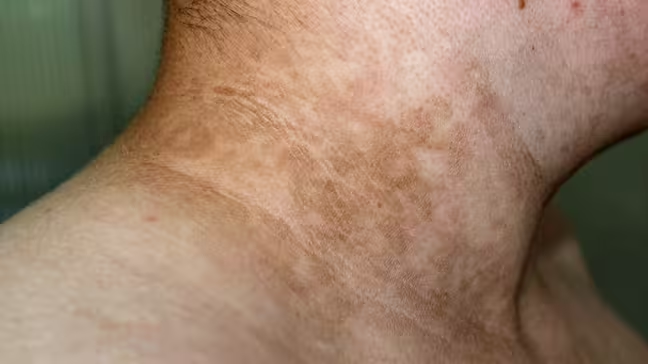
Acanthosis nigricans
Dark, thickened, velvety plaques on the sides and back of the neck, often also in the armpits. This is the look Berg describes. Usually a metabolic/insulin sign, not an autoimmune rash.
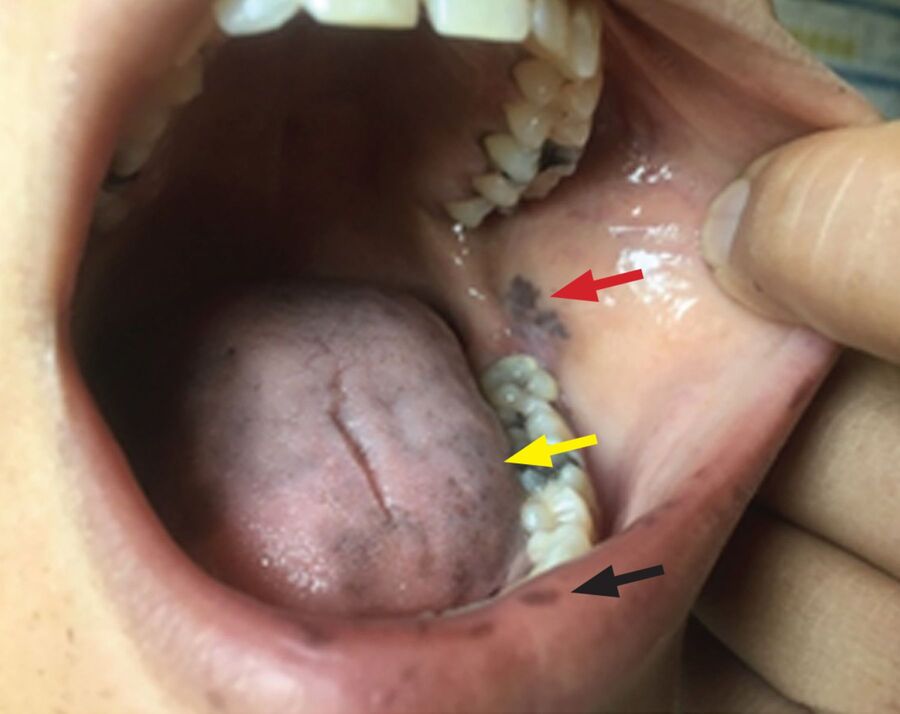
Addison’s disease
Darkening is generalized, not a single velvety neck stripe. Classic clues are extra pigment in the mouth, gums, knuckles, and palmar creases, plus fatigue, weight loss, and salt craving.
Vitiligo
The opposite of a dark neck: loss of pigment in sharply bordered white patches. Can involve the neck, face, and chest. Often autoimmune.

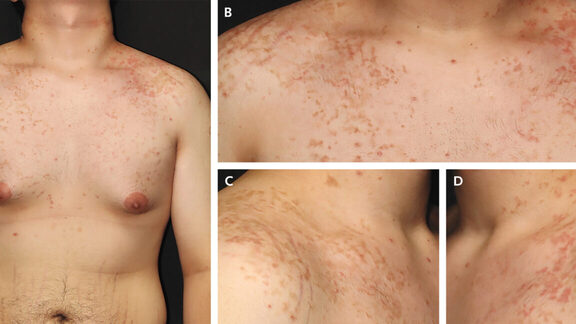
Keto rash / prurigo pigmentosa
Starts as an itchy red rash on the neck, chest, and upper back. As it heals it can leave a net-like or speckled brown pattern. Not autoimmune.
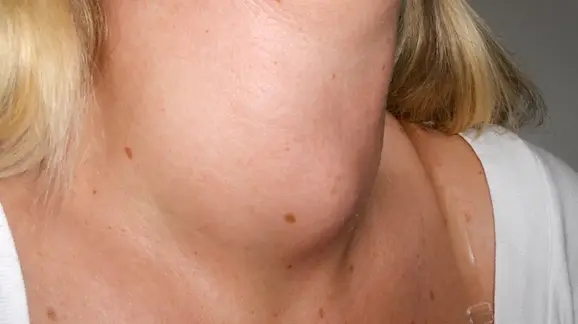
Hashimoto’s thyroiditis
No specific “dark sides of the neck” rash. The visible neck finding, when present, is a goiter (enlarged thyroid) in the front of the neck — not velvety pigmentation.
Vitamin D
There is no single photo for low vitamin D. Berg treats it as a background factor in many autoimmune and skin diseases (eczema, psoriasis, vitiligo, dermatitis), not as a unique neck pattern.
Pellagra (Casal’s necklace)
A sun-sensitive, scaly, brown collar around the neck from niacin (B3) deficiency. Different from velvety acanthosis nigricans.
Quick visual contrast: velvety dirty-looking sides of the neck = acanthosis nigricans. White patches = vitiligo. Itchy red then lacy brown on chest/neck = prurigo pigmentosa. Mouth/gum darkening plus whole-body tan = think Addison’s. Front-of-neck swelling = goiter/Hashimoto’s, not a pigment rash.
How to tell the pictures apart (practical, not diagnostic)
- Velvety, dirty-looking dark patches on both sides of the neck and in armpits → classic acanthosis nigricans; think insulin/metabolic workup.
- Darkening plus fatigue, weight loss, low blood pressure, salt craving, dark knuckles or mouth lining → think Addison’s; urgent medical evaluation.
- Sun-exposed collar of red then brown scaly skin around the neck, maybe diarrhea or mental changes → think pellagra / B3.
- Itchy red bumps on neck/chest after starting keto or fasting, later leaving a lacy dark pattern → keto rash / prurigo pigmentosa.
A clinician can usually separate these by exam plus labs (glucose/insulin or A1C, thyroid panel and antibodies, morning cortisol/ACTH if Addison’s is suspected).
Bottom line
The Berg content that matches “darker skin on the sides of the neck” is almost certainly acanthosis nigricans from high insulin, not an autoimmune diagnosis. If you meant a true autoimmune darkening, the condition he discusses is Addison’s disease, which looks different and needs medical care.
This is not medical advice. New or spreading pigmentation, especially with systemic symptoms, should be checked by a physician or dermatologist.